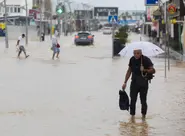
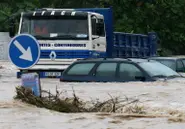
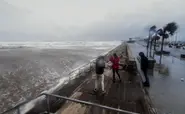
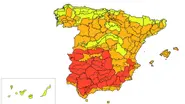
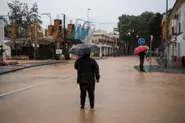
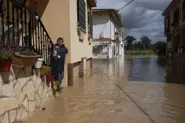
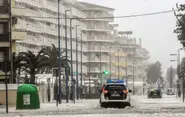
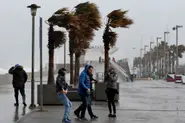
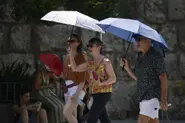
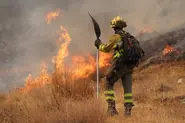
The DANA phenomenon first became well known in Spain after the deadly Valencia floods. A year on, Catalonia and the Balearic Islands have also been hit by torrential rain and flooding. But what exactly is a DANA, how is it different from a storm and are they becoming more common?
Flooding wreaked transport havoc on the popular Spanish holiday island of Ibiza for the second time in two weeks on Saturday as more torrential rain lashed the country's Mediterranean region.
Southeastern Spain on Friday experienced its second day of torrential rain which already led to floods in Alicante and Murcia on Thursday, causing evacuations, road closures, and communication problems.
Spain’s state weather agency Aemet has issued several alerts warning of the "extraordinary danger" posed by heavy rains and flooding as Storm Alice sweeps across Valencia, Alicante, Murcia and the Balearics.
Spain's Mediterranean holiday islands of Ibiza and Formentera emerged relatively unscathed from torrential rainfall on Tuesday that triggered floods and prompted the closure of beaches and schools.
After heavy rain and flooding in Valencia, storms are now headed for the Balearics, which have been issued with several weather warnings. Here's what AEMET's coloured alerts mean and what you should do in each situation.
Ibiza and Formentera were placed under red alert on Tuesday, with forecasters warning of "extraordinary danger" from heavy rainfall that could trigger flash floods and river surges in the Mediterranean islands.
Spain's traumatised Valencia province on Monday suffered another night of torrential rain that sparked fears of a repeat of last year's deadly floods. Its weather alert has been downgraded to orange on Tuesday as the storm moves to the Balearics and Alicante.
Spain's meteorological agency has put the eastern Valencia region under red alert for heavy rains, amid fears of a repeat of floods that killed 235 people last October in the area.
Spain is braced for the back end of a hurricane that could bring stormy conditions over the weekend, but this comes as meteorologists forecast a rebounding in temperatures above 30C in some parts of the country.
Many across Spain have been looking forward to September and its cooler temperatures, but the mercury will surpass 35C in many parts of the country this week and even reach 40 in the south before a welcome change in the weather by the weekend.
Spain's Valencia region suffered chaos due to a meteorological phenomenon known as a wet downburst which tore down trees on Monday, with the adverse weather due to move up the coast this Tuesday to the Balearics and Catalonia.
Spain's average temperature in August 2025 hit 25C, matching the national record set the same month last year, the national meteorological agency AEMET said Friday.
While human error and drought conditions can play a role in causing wildfires, experts are pointing to the relatively unknown phenomenon of 'dry storms' as making Spain's summer of wildfires worse.
As Spain enters its third week of heatwave alerts, firefighters continue to battle blazes in the northwest and west of the country, with army units deployed to help contain the blazes.
Spain’s national weather agency has announced that the current heatwave looks likely to linger four days longer than anticipated, lasting at least 11 days and bringing temperatures of up to 43C.
In countries such as the UK, Australia or the US, it’s mostly legal for men to go shirtless around city streets or for women to walk around in their bikini tops, but can the same be said for Spain? It depends.
It's official, the second heatwave of the summer has already begun in Spain. How hot will it actually get, which parts will be most affected and how long will this 'ola de calor' last?
Spain's Valencia region is a hot and humid place over the summer. Fortunately there are several towns where minimum temperatures get surprisingly low through the high-season and you can cool down alongside rivers and mountains.
When Spain's scorching summer temperatures come along, you need to look at all the possible ways of keeping cool. The big question is will a ceiling fan do the job well enough or is the extra cost of air-conditioning worth it?
"Not kitsch, nor for old women" - The Spanish 'abanico' or hand fan has retained its relevance amid increasingly oppressive summer temperatures, meaning that for many it's also a fashion item no different from a handbag or a pair of shoes.
Not everywhere in Spain is scorching hot in the summer. Here are some amazing holiday spots where temperatures are cooler on average during June, July and August.
Spain had its hottest June on record last month, with an average temperature of 23.6 degrees Celsius (74.5 degrees Fahrenheit) "pulverising" the previous high, the Aemet national weather service said Tuesday.
A village in southern Spain experienced 46C this weekend, the highest temperature for a month of June since records began in the country. So when will we finally get some respite from the current heatwave?