
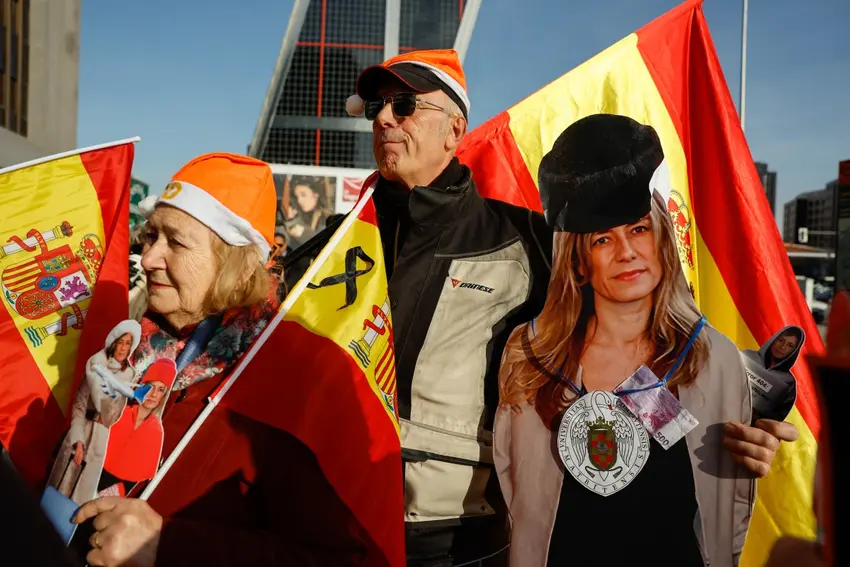
Spain has dropped once again in international corruption rankings, continuing a long-term downward trajectory.
But perhaps this is no surprise. Corruption cases, or, rather, alleged corruption cases, dominated Spanish politics in 2024, 2025, and now the beginning of 2026.
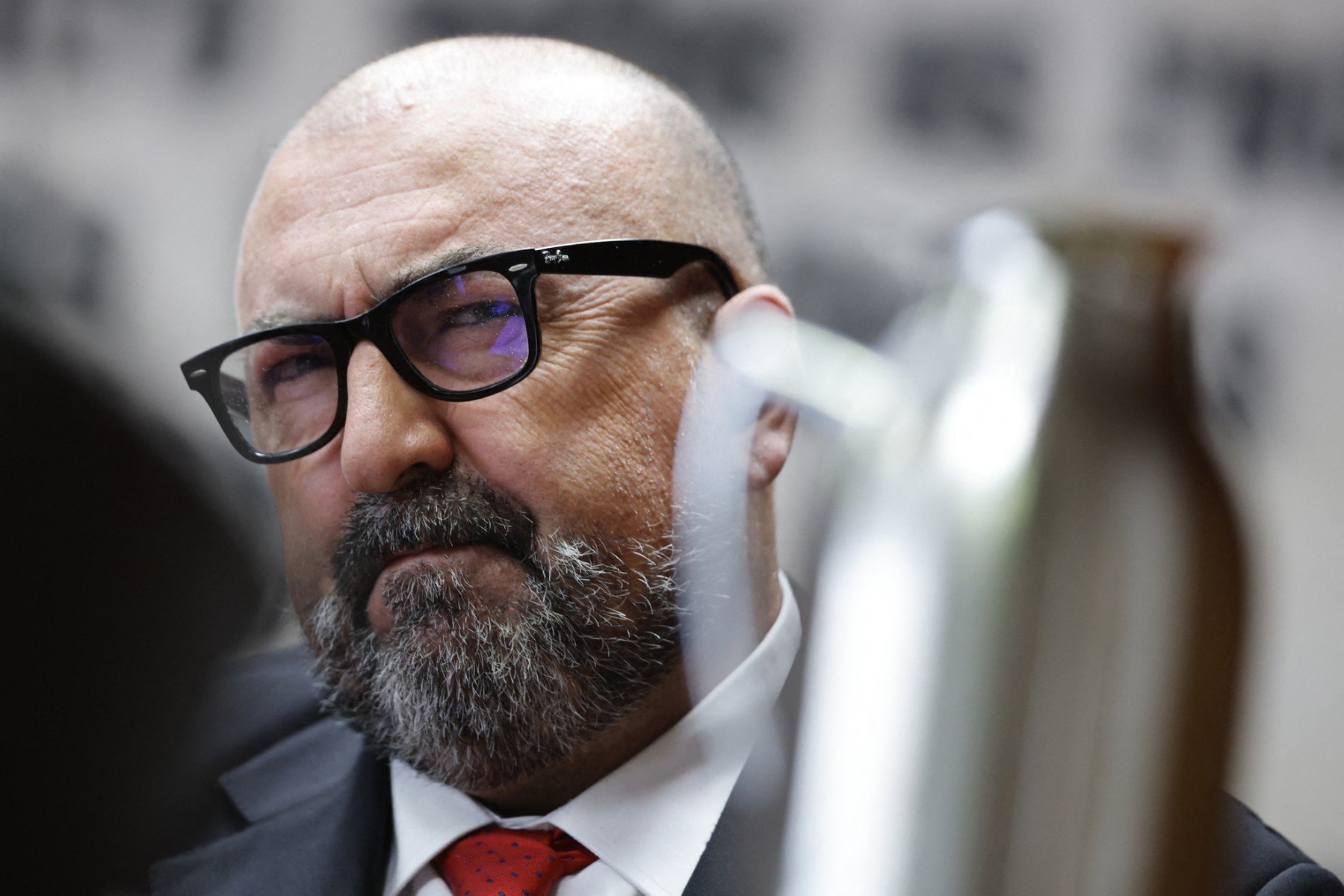
The infamous Caso Koldo surrounding the purchase of face masks during the pandemic, as well as scandals involving former government Minister José Luis Ábalos, and allegations against Prime Minister Pedro's Sánchez's wife and brother (in separate cases) as well as his attorney general, might have something to do with it.
All this while the opposition Partido Popular is also investigated for historic corruption. Cristóbal Montoro, Spain's former Finance Minister, has been charged with creating "a network of influence" and taking kickbacks to favour gas companies that hired his law firm. Montoro is among more than 20 accused, including senior treasury officials, of receiving at least €11 million from energy companies for favourable government policy.
READ ALSO: Fresh corruption scandal hits Spain's opposition party
Of course, it should be said that in each case the allegations have been strongly denied, and many in Spain claim some of the allegations are clear evidence of politically-motivated lawfare.
That said, falling by a further three places to 49th internationally, Spain scored 55 points out of 100, one point less than the previous year, and fell three places in the global ranking, to 49th out of the 182 countries analysed, according to the latest Transparency report published on Tuesday.
With this new rating, Spain's position in the world rankings has fallen from 36th in 2023.
Spain is level with Cyprus and Fiji and lags behind countries such as Portugal (56 points) and Slovenia (58 points). At the European level, Spain drops from 16th to 17th place among the 27 European Union countries, placing it below the EU average.
READ ALSO: What's the latest on Spain's Koldo corruption case and is the PM involved?
Although it places it above the global average of 43 points, Spain is one of the countries categorised as a ‘flawed democracy’ and ranks below Botswana, Isreal and Costa Rica.
Spain did, however, outperform EU countries such as Italy and Poland.
Besides the high profile cases in recent years, Transparency International has also previously pointed to the delay in implementing European directives and the fact that Spain still lacks a national anti-corruption strategy and solid legislation on conflicts of interest.
The rankings
Transparency International’s Corruption Perception Index (CPI) ranks 180 countries and territories around the world by their perceived levels of public sector corruption. Each is given a corruption score on a scale of 0 (highly corrupt) to 100 (very clean).
Drawing on information sourced from survey data carried out by globally respected institutions such as the World Bank, the index considers several factors or indicators of bribery, studying how susceptible public institutions are perceived to be to bribery, embezzlement, officials who use public office for personal gain, institutions preventing anti-corruption and enforcement regulations, bureaucratisation and nepotism, among others.
One key takeaway from the 2025 Index is that the report highlights that in most EU countries there has been a “general decline in scores” reflecting a “worrying state of stagnation in the effective implementation of anti-corruption standards”.
At the top of the perception list are Denmark, Finland, Singapore and New Zealand, countries that, according to the Democracy Index, are also the top for civil liberties in the world. The countries who received the lowest scores were South Sudan, Venezuela, and Somalia.
Transparency International suggests that the world’s larger economies - such as Spain's, which is among the top 15 in the world - should never receive a CPI score of below 70, especially if it wants to maintain its respect and competitiveness on the international scene.
Looking back
Using data available from past CPI studies, it becomes clear that Spain’s recent slip in the league table is not an anomaly but part of a longer-term trend. In 2000, Spain sat in 20th place with a score of 70 (or a 7.0, as the CPI was done on a 1-10 scale back then), and was neck and neck with countries such as France, Ireland, and Israel. Yet by 2005 it had slipped to 23rd place, albeit with the CPI score holding firm at around 70.
However, by 2010 Spain had dropped to 30th position, and its CPI score had dropped dramatically by 9 points to 61 (6.1 on the old scale). By 2015 the position had worsened, sinking to a score of 58 and flanked by Lithuania and Latvia, and in 2018 Spain ranked 41st in the world albeit with an unchanged CPI score of 58.
It seems clear that Spain’s CPI score had been in steady decline for the last two decades. Since the year 2000, the perception Spaniards have of their public institutions and actors - whether it be political parties and politicians, the police force, public administrations, and local ayuntamientos - and their susceptibility to corruption has worsened.
But the statistic that sticks out in the CPI data is the sudden drop in trust in public institutions from 2005 to 2010. Was there something specific that could explain such a change in public opinion?
Corruption in the news
The notable corruption cases (Caso Koldo, Sánchez's brother and wife to name just a few) likely played a role in Spain's slipping international ranking. But these sorts of cases are nothing new here. In fact, blatant corruption at various levels of state and government -- think police, politics and even royalty here -- have long been common in Spain.
READ ALSO: What's the latest on Spain's Koldo corruption case and is the PM involved?
The infamous Gürtel case is perhaps one famous corruption case that could explain both the sudden drop in public trust between 2005 and 2010, and the steady decline in more recent years. The Gürtel case, a case that engulfed right-wing party PP in accusations of money laundering, tax evasion, and bribery, came to light in 2009 but the main suspects were not put on trial, or even publicly named in some cases, until late-2016, both periods of time when Spain’s CPI score dropped.
The corrupt activities involved party funding and the awarding of contracts by local and regional governments in Valencia and Madrid, among others. Judges estimated the loss to public finances was a staggering €120,000,000.
Operation Kitchen has dominated the headlines in more recent years, and could also be a contributing factor in Spain’s falling position in the CPI. It also follows on and is connected to the Gürtel case, neatly tying together over a decade of corruption in PP that surely did damage to Spain's reputation both abroad and domestically.
Known as Operación Kitchen because the code name of the alleged informant was ‘the cook’, the informant worked as a driver for the former treasurer of the Popular Party (PP), Luis Bárcenas, who in May 2018 was sentenced to 33 years in jail for his role in a kickbacks scheme which financed the party known as, you guessed it, the Gürtel case.
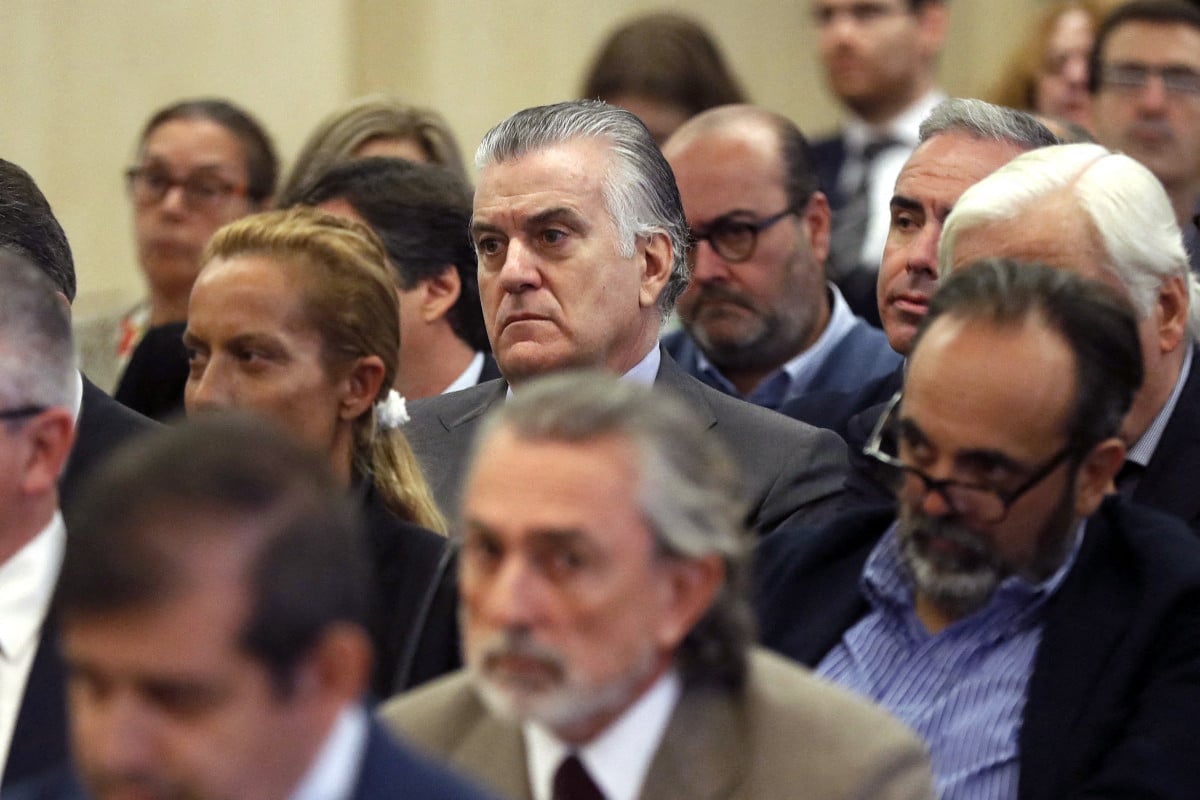
The ruling led to the ousting of PP Prime Minister Mariano Rajoy in a confidence vote in parliament several days later, who was then replaced by Sánchez (and with him another set of corruption allegations a few years later).
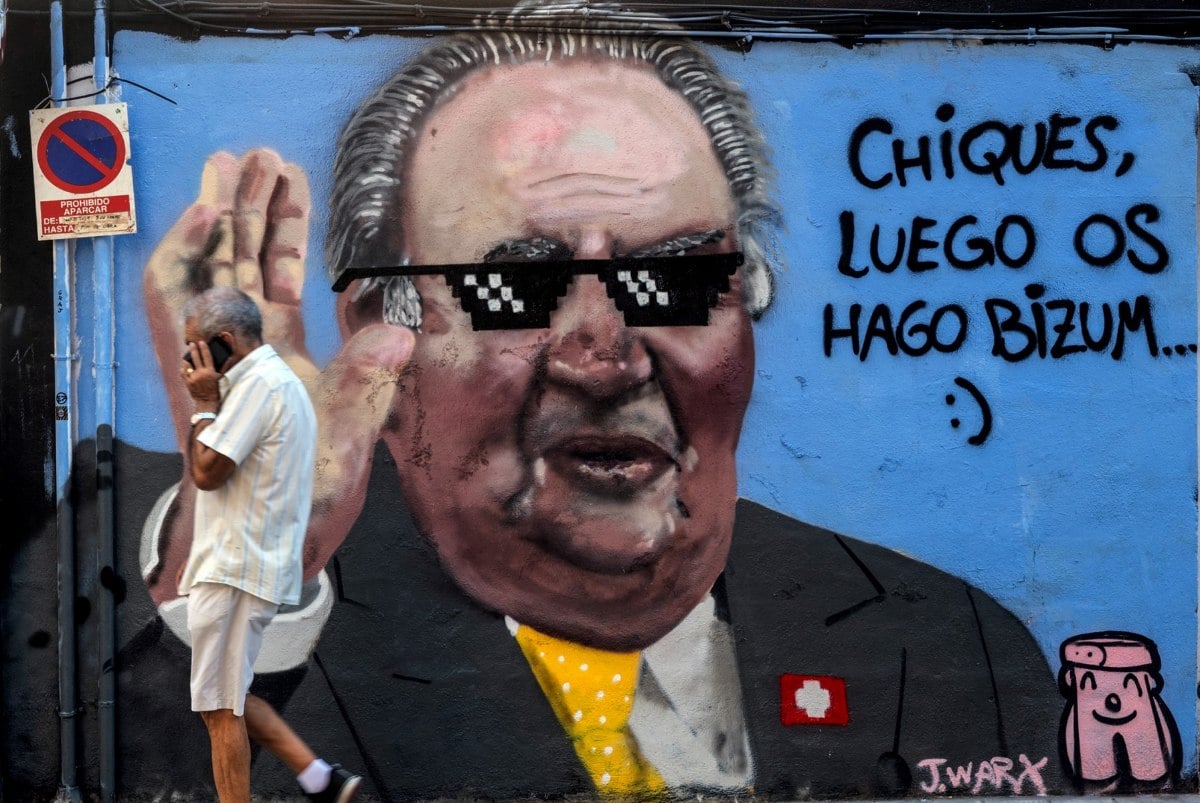
Of course, you can’t talk about corruption in Spain without talking about its royal family. Juan Carlos I, the now exiled former King of Spain had a list of alleged corruption charges longer than a Spanish waiter’s order pad on a Saturday night: the Saudi rail payoffs and money hidden in Swiss bank accounts; the mystery credit cards paid off by Mexican businessmen; the €10 million found in a Jersey bank account and, finally, his goat hunting trip with the President of Kazakhstan in which Juan Carlos left with armfuls of briefcases containing over €5 million in cash.
In March 2022, Spanish prosecutors dropped all investigations into his finances.
But corruption in Spain not only exists at the elite level; although the upper echelons of Spanish society - government, the royal family - have been tarnished by allegations of corruption, perhaps it is the perceived corruption of local and regional institutions that contribute to Spain’s falling CPI score.
Small town corruption is nothing new. In January 2022, a councilwoman in the tiny Alicante province beach town of Santa Pola was arrested on suspicion of taking up to €40,000 in bribes over several years, and handing out catering contracts for money and favours.
The environmental scandal at Murcia’s Mar Menor has also been stained by corruption allegations. Former Minister of Agriculture in the region, Antonio Cerdá, is facing up to six years in prison for fraud and embezzlement and his role in the pollution of Murcia’s Mar Menor lagoon.
And police forces across Spain are no better, it seems. As the Catalan Generalitat investigates several cases of corrupt Mossos in its police force, port authorities and Guardia Civil agents across Spain, including Catalonia and Algeciras in Andalusia, have been arrested for taking bribes to turn blind eyes to drug trafficking.
Even during the height of the Covid-19 pandemic, local mayors across Spain and its territories were caught out using their position and influence to queue-jump and get vaccinations before vulnerable groups.
Looking ahead
Perhaps the combination of this low-level corruption, and the slow-term eroding effect it has on public trust in institutions, along with the more high-profile national cases that envelop kings and politicians explains Spain’s steady decline in the CPI score.
In many of these cases, the alleged corruption is still to be proven. But nonetheless, such high profile allegations surrounding the Prime Minister in the last year have surely contributed to an image (rightly or wrongly) of the government and Spain more generally. When Spain hits international headlines, it's often about corruption.
READ MORE: Why is Spain’s PM defending politicians charged with corruption?
Social media undoubtedly plays a major role in influencing public opinion, as it provides Spaniards with minute by minute, rolling twenty-four hour news coverage of every misdeed anyone in public life does that they didn’t have in the past.
Judging by the CPI data available, it does seem that public opinion in Spain is swayed by such events and coverage. The noticeable drops in public trust in institutions between 2005-2010, and again around 2018, mirror major national scandals.
A multitude of factors could contribute to the worsening public perception of corruption in Spain: greed, social media, a constant news cycle, small town politics, pay-offs, bungs, bribes, new major national scandals, more dirt on exiled former kings.
This latest fall in the 2025 rankings seems more evidence of this trend, and it seems to be a trend only going in one direction: downwards.
Comments