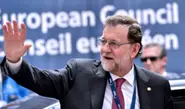
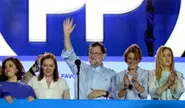
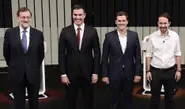
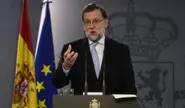
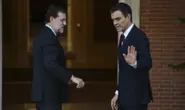
Spain's acting Prime Minister Mariano Rajoy began talks on Thursday with other political parties to try to form a government after his conservative Popular Party won repeat elections, but fell short of an absolute majority.
Spain's ruling conservatives emerged stronger from weekend repeat elections even if they still don't have a majority, and will make a fresh push to form a government in the face of hostile rivals.
Spain's Socialists said on Monday they would not back a government led by Mariano Rajoy, in the first sign that the incumbent prime minister may have a tough time forming a coalition after yet more inconclusive elections.
Spain's acting Prime Minister Mariano Rajoy said he would make a push for power after his conservatives won more seats in parliament in a repeat general election on Sunday, even though it still fell short of a majority
Spain's ruling conservatives won a repeat general election on Sunday with 32.7 percent of the vote, ahead of the Socialists which came in second, with 90 percent of ballots counted.
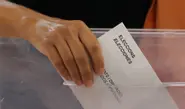
Spaniards cast ballots for the second time in six months in repeat polls on Sunday that may see the conservatives remain in power, even if many vote for left-wing parties. But what are the possible outcomes?
Just days after a shock Brexit, Spaniards voted in repeat elections Sunday to decide if they too want a radical shift as promised by a far-left coalition led by Podemos.
In Spain's southern tourist hotspot Jerez de la Frontera, Cristian Garcia whiles away the day sitting on a bench with his mates. Unemployed, he will vote for a far-left coalition led by Podemos in Sunday's elections.
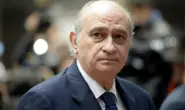
Spain's interior minister faced calls to resign Wednesday over a conversation leaked four days before elections in which he and an anti-fraud official appear to discuss ways to incriminate his political rivals.
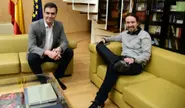
Spain suffered a fresh setback Friday after the Socialists and anti-austerity party Podemos - key players in a weeks-long bid to form a government - hit a deadlock in talks.
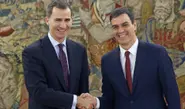
Spain's king gave Socialist party chief Pedro Sanchez the tough task of forming a government on Tuesday in a bid to end a potentially damaging political deadlock more than six weeks after inconclusive elections.
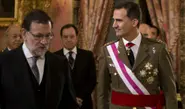
The mediation skills of Spain's King Felipe VI are being put to the test this week as he meets with political leaders to try to end the impasse the country has faced since an inconclusive general election.
Spain's acting Prime Minister Mariano Rajoy said on Monday he hoped a new government is formed "as soon as possible", warning political uncertainty threatens to derail the economy.
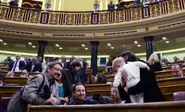
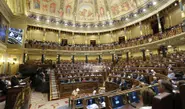
Spain's lower house was filled with new faces at the opening session of Spain’s new parliament following last month’s inconclusive general election - and the star of the show was still in nappies.
Spain's parliament holds its first session Wednesday, with lawmakers from four conflicting main parties taking their seats at a time of political turmoil intensified by a resurgent secessionist threat in the Catalonia region.
From a clamour for Catalan independence and the hottest summer ever to the death of the two-party system and siestas becoming compulsory, it has been a busy year for Spain...
Spain's beleaguered Prime Minister Mariano Rajoy said on Tuesday he would battle on to try and form a government despite categoric refusals by other key parties to back him after inconclusive
elections.
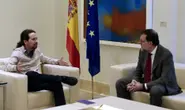
The head of Spain's far-left party Podemos, a potential kingmaker following an inconclusive general election, on Monday ruled out offering support to any party in forming a new government.
The head of Spain's Socialist party, Pedro Sánchez, has refused to back a government led by prime minister Mariano Rajoy, ruling out a grand coalition of Spain's two traditional parties after Sunday's inconclusive election.