
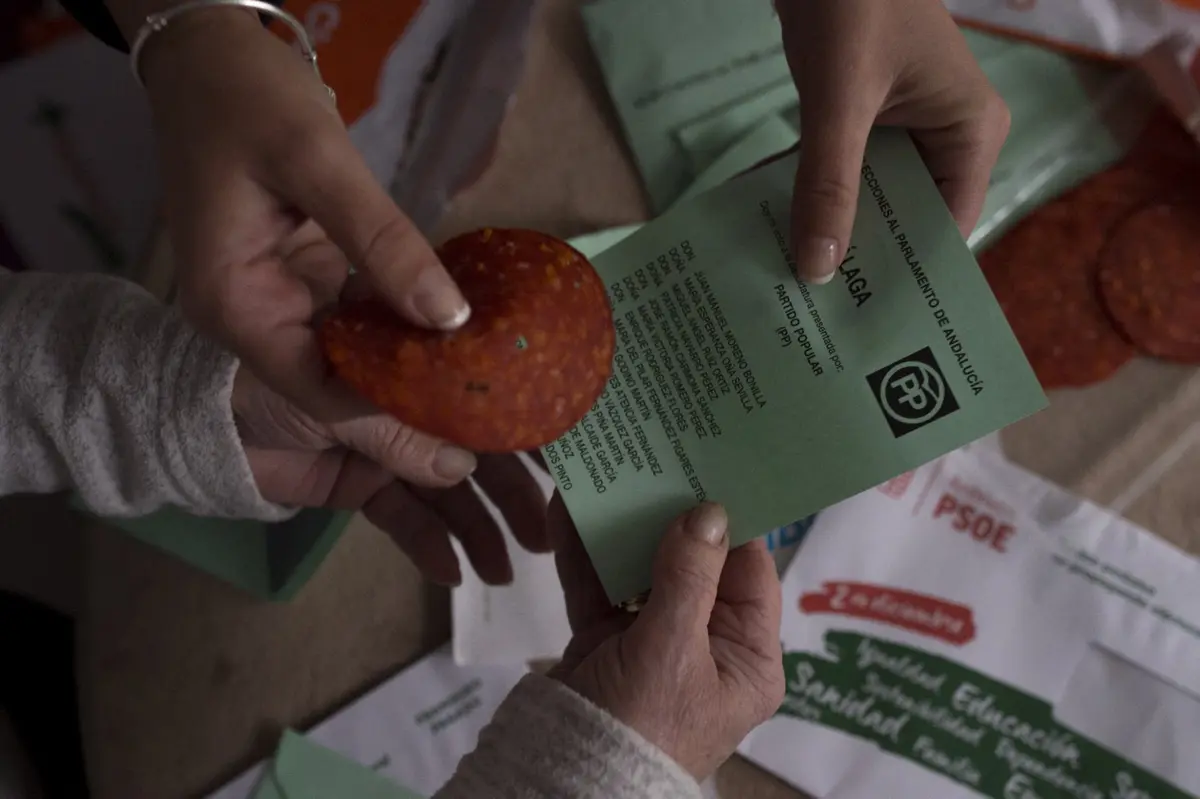
Beyond chorizo's everyday use, the word has a more negative meaning - thief - and is hurled as an insult against corrupt politicians or fraudsters.
Why do I need to know this word?
It’s a word that you will often here in discussions about corruption and by those protesting against the misuse of public funds during times of economic hardship.
Chorizo has become a potent symbol, with sausages brandished at protests to demonstrate against corruption and economic hardship and slices of sausage have even been used as a protest vote inserted in ballot papers.
In recent years, the term has been used recently against the former King Juan Carlos as he fled into exile amid allegations of money laundering as well as politicians named in the Gürtel case, a widespread scandal that shook the Popular Party and led to the downfall of former PM Mariano Rajoy.
Why chorizo?
It seems the use of the term chorizo to refer to a thief or swindler in Spain, has its roots in a series of words used in Caló, the Spanish Romani language, to refer to thieves and the act of stealing.
READ ALSO: 18 cool Spanish words that come from Spain's Gypsy language
"It comes from Caló. In Caló there are words like 'chori' which is in the dictionary and means thief, chorar which means to steal, to pilfer and there are some variants like choro or choribar etcetera that aren't in the dictionary but have been documented," explains Leonardo Gómez Torrego, a consultant at Fundeu BBVA, a foundation that promotes the correct use of the Spanish language.
Legend has it that it became popular to describe thieves as chorizos in medieval times when thieves were executed and hung in public squares “like cured meat”.

Who can I use this word with?
Basically anyone, as it’s not offensive except to the person being called a “thief” but maybe make sure the mother-in-law isn’t a huge royalist before you insult King Juan Carlos.
Add it liberally to discussions about cheating politicians and corrupt bankers.
Examples:
¿Quieres que te haga un bocadillo de chorizo con queso?
Do you want me to make you a chorizo and cheese baguette?
La corrupción hace que muchos políticos se conviertan en unos chorizos.
Corruption makes many politicians become chorizos.
Comments