A majority of Spanish voters oppose holding fresh polls to resolve a political impasse caused by an inconclusive general election last month and want parties to form a coalition government instead, a survey showed on Sunday.
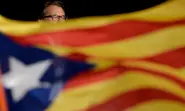
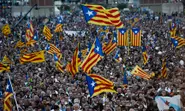
A fiercely secessionist leader was elected president of the wealthy region of Catalonia on Sunday thanks to a last minute show of unity, giving fresh impetus to attempts to break away from Spain after months of infighting.
Catalonia's separatists are set to vote in a new regional president on Sunday to push for independence from Spain, itself without a government, after the region's leader stepped aside.
A far-left Catalan separatist party has decided not to back a new regional government led by outgoing president Artur Mas, putting the region on course for fresh elections, Spanish media reported on Sunday.
Catalonia’s bid for independence from Spain has thrust the region’s separatist movement to the forefront of Sunday’s general election, forcing parties to come up with a range of proposals on how best to meet its demands.
Mariano Rajoy was accused of being unfit to govern by his socialist challenger on Monday in an unusually ferocious election debate held before this Sunday's general election.
Aragon is to Spain like Ohio is to the United States: for more than 30 years this northeastern region has always voted for the winner of general elections, and this year should prove no exception.
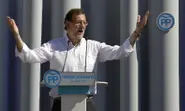
Spanish Prime Minister Mariano Rajoy said Saturday his government represented the "moderate and reasonable majority" in the face of "extremist" rivals out to unseat his conservative Popular Party in a December election.
A radical left-wing group in Catalonia was preparing Saturday to act as kingmaker in an election that nationalists hope will set the region on the road to independence from Spain.
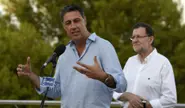
Spanish Prime Minister Mariano Rajoy on Wednesday backed a former mayor whose comments have been called xenophobic as his party's top candidate for regional elections in independence-minded Catalonia.
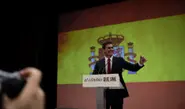
Spain's opposition Socialists on Sunday named party chief Pedro Sánchez as their candidate to run for prime minister in a year-end general election in which upstart parties are expected to make
inroads.
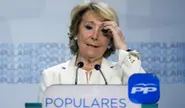
Esperanza Aguirre, the PP candidate who failed to win a majority in Madrid, is desperately courting the socialist opposition to form a pact against the anti-austerity candidate.
Manuela Carmena, a 71-year-old retired judge and former member of the Communist party who fought for human rights under dictator Francisco Franco looks set to become Madrid’s mayor, ousting the PP after 24 years of power.
The success of radical upstart parties in Spain's local elections means Spain is facing an era of coalitions - a strange new world for the country's two traditional ruling parties.
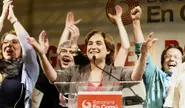
A career spent pounding the streets in anti-austerity campaigns has brought Ada Colau close to leading one of Spain's most powerful and most visited cities, Barcelona.
Esperanza Aguirre just wins most votes in City Hall but protest candiadate Manuela Carmena could forge an alliance with socialists to take the City Hall.
Sunday's election saw a dramatic shake-up of Spanish politics. In Madrid the ruling PP saw their majority shattered, while in Barcelona, a 41-year-old "indignado" won the most votes toppling CiU's grip on City Hall.
Valencia, the seaside city famed for huge scale public works projects and blighted by corruption scandals, will be a key test for the new electoral dynamic when it goes to the polls on Sunday.