
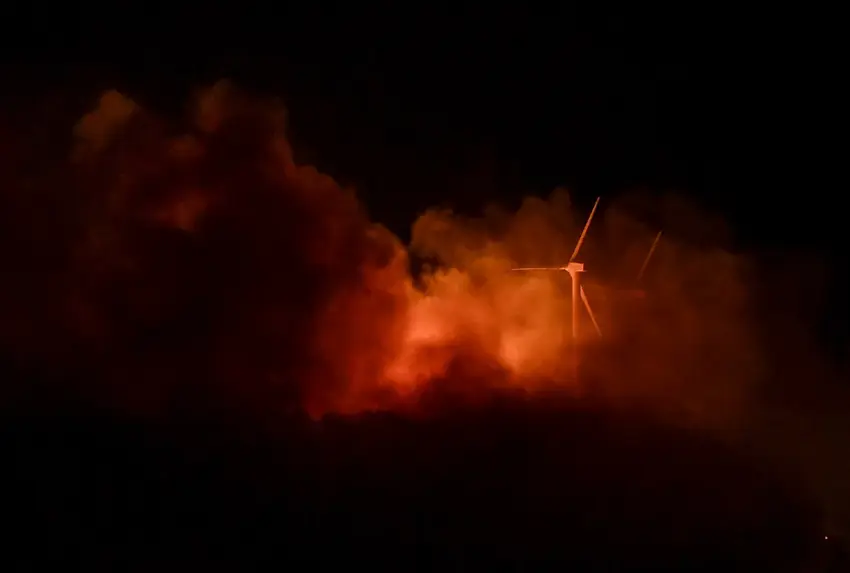
More than 400 firefighters backed by army reinforcements were battling the growing blaze in a sparsely populated part of the region of Aragon, where five small villages had been evacuated.
Roberto Bermúdez de Castro, a senior member of the regional government, said around 7,600 hectares (18,700 acres) of forests and farmland had been burned.
It was "one of the most serious and complex forest fires" Aragón had suffered in years due to high temperatures, low humidity and strong winds, he told an evening press briefing.
The official had said the fire would "take days to control" but added that the night would offer "a window of opportunity" thanks to cooler, calmer winds.
MAP: How to find out where Spain's wildfires are
Footage shared by firefighters showed the blaze eating away at expanses of forests and parched fields, while a giant pyrocumulus billowed in the sky.
Prime Minister Pedro Sánchez expressed "all my solidarity with the residents affected by the fire" on X, urging the population to exercise caution and obey the authorities.
Scientists say human-driven climate change is increasing the length, intensity and frequency of extreme heat, which creates favourable conditions for the spread of wildfires and complicates firefighting efforts.
Peak temperatures of up to 40C have hit Aragón in recent days.
Spain is scarred by last week's ferocious wildfire in the southeastern province of Almeria that claimed 13 lives -- including seven Britons and an American -- and ravaged 7,000 hectares.
Deadly wildfires devoured almost 400,000 hectares of land in Spain last year, the highest figure recorded for the country by the European Forest Fire Information System.
Comments