
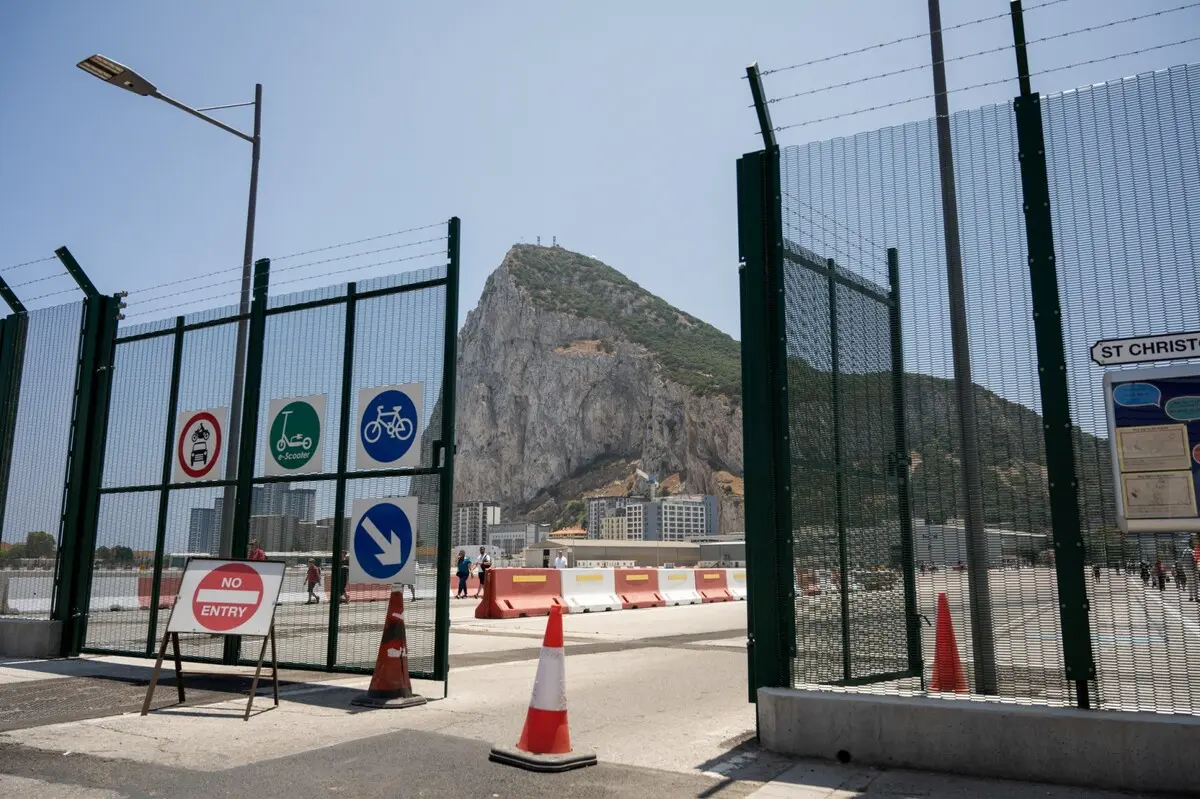
It was over a year ago that the EU announced that it had finally come to an agreement with the UK, Spain and Gibraltar, tying up the last loose end of the Brexit process some five years after the UK formally left the block and a decade after the referendum vote.
This follows years of negotiations to settle Gibraltar's post-Brexit status, a tiny British overseas territory that has a land border with Spain and, by extension, the EU.
Negotiations stuttered at various junctures, especially under the previous Conservative government in London. The arrival of a new Labour government in 2024, however, is widely viewed to have kick-started talks and formed part of a wider reset of relations with Europe.
But now, finally, from July 15th the treaty will enter into force and border controls between Gibraltar and Spain will be removed.
READ ALSO: New era for Gibraltar as border controls with Spain set to end
The agreement, which will be formally signed on Tuesday in Brussels, aligns Gibraltar with the rules of Europe's Schengen travel area and joins a customs union.
The deal was reached after years of talks between Spain, Britain and the EU and according to a Gibraltar government document, "ensures a fluid border for people and goods between Gibraltar and the EU; strengthens cooperation with the EU and Spain and protects British sovereignty – including the operational autonomy of the UK’s military base."
The agreement still needs the approval of the European parliament, where MEPs will vote on its ratification later this year.
What's happening on Wednesday 15th July?
The treaty enters into force, legally speaking. One day after the signing in Brussels, the new regulatory framework will come into force.
From then on, at 00:00, the deal comes into force with novelties such as no further border controls, a new tax, and the Spanish police authorities will be responsible for controlling access to the Schengen area at Gibraltar Airport.
Historic border removal
The agreement removes physical border controls with Spain for the first time in 118 years and introduces dual border controls at Gibraltar’s port and airport.
Spanish Prime Minister Pedro Sánchez is set to visit the border, known as La Línea, on Wednesday, where workers have in recent weeks taken down the old chain-link fencing between Gibraltar and Spain.
He has hailed the new arrangements as bringing down "the last wall" inside the EU, saying they would create a zone of shared prosperity.
The border removal aims to maintain a ‘fluid’ border between Gibraltar and Spain.
In addition to being historically symbolic, it's being done with the aim of facilitating the movement of the more than 15,000 people who travel daily between the two territories. Many Andalusians living in the area travel to Gibraltar and Gibraltarians often have business and family ties to the area across the border in Cádiz province.
Border checks
The agreement also creates ‘dual’ EuroStar-style border controls carried out by both Gibraltarian and Spanish officers at the port and airport.
It's notable that Spanish police will do passport checks in Gibraltar airport, rather than Frontex officers, the EU’s border agency, as was long expected during negotiations.
Spanish daily El País reports that the British Government believes border checks “will be implemented in a similar way to the one already in place with the French police operating at St Pancras train station in London."
“Spain will be responsible for ‘carrying out full Schengen checks’," it adds.
What about the 90/180 day rule?
Here it seems there'll be a little leeway when it comes to the letter of the law versus the reality on the Rock.
According to the deal, cited her by the House of Commons library: "Gibraltar residents will be subject to the 90/180 day limit for stays within the EU/Schengen area, although in practice this may be difficult to enforce given the absence of checks on the border with Spain."
Sovereignty
The long-awaited agreement has no impact on sovereignty claims.
Gibraltar's Chief Minister Fabian Picardo has dismissed suggestions the historic deal could support Spain’s sovereignty claim.
"That’s a pipe dream that some Spaniards might have," he said in British media. "We’re not people who have acquired Britishness and might be persuaded to hand it back. We are as British as any of the people who sit round a cabinet table in Downing Street. Our fibre is British. Our culture is British," he added.
In material terms, the agreement has no direct impact on sovereignty. However, the issue of Spanish police on British territory — border guards in the airport, in this case — was long a sticking point during negotiations and has for decades been a point of contention among Gibraltarians who remember the tough years when dictator Francisco Franco closed the border for thirteen between 1969 and 1982.
British and Gibraltarian sources have been keen to downplay sovereignty losses. However, Eurosceptic voices in the UK will likely view the passport checks as a concession to the Spanish.
Some in Madrid may view this as a victory, and reports suggest that the fluid land border was made conditional on 'Spanish boots on British territory’ at the airport.
What about goods controls?
The agreement also seeks to eliminate goods controls between Gibraltar and the EU via Spain.
"In the area of goods, the Parties agreed on the principles underpinning the future customs union between the EU and Gibraltar, providing for strong cooperation between the respective customs authorities and removing checks on goods," according to a joint statement.
Picardo has reiterated the "complete and utter fluidity of people and goods" between Gibraltar and Spain and the EU is a driving principle of the deal and essential for the lives of Llanitos and Spaniards alike.
Like with cross-border workers, thousands of businesses in Gibraltar and the Campo de Gibraltar area of Càdiz across the border depend on fluid crossings with minimal goods controls.
And what about taxes?
Similarly, another novelty of the new arrangement is that in the absence of VAT in Gibraltar means that a new transaction tax' was created to replace import duty.
It will be charged on all goods sold on The Rock, starting at 15 percent before being upped to 17 percent.
Spanish authorities have long called for tax reform on the Rock, arguing the lack of sales tax encourages smuggling of contraband goods into Spain.
This is particularly true on tobacco and alcohol sales. Spain's Foreign Minister José Manuel Albares announced that the deal will include a "fiscal convergence process” because the Rock “is joining the customs union.” The aim is to prevent indirect taxes applied in Gibraltar, such as on tobacco, from distorting competition in the Campo de Gibraltar area.
The deal also pledges to fight money laundering, another historical complaint of Madrid.
READ ALSO: The benefits of Spain removing Gibraltar from its 'tax haven' list
Comments