
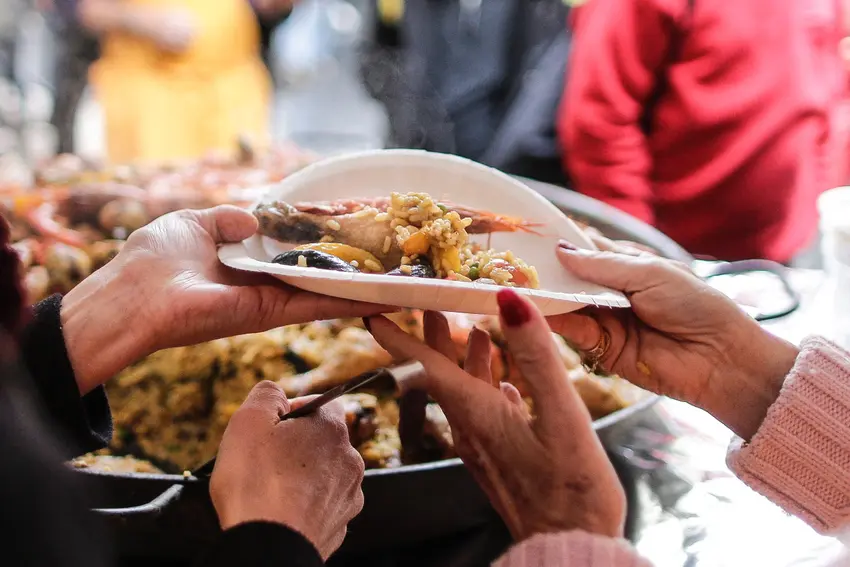
Paella has become synonymous with Valencia and wider Spain, being one of the most popular and well-known dishes among tourists and visitors.
But it's not just a dish for tourists, it's still enjoyed by many locals across the country, often by the seaside for lunch on sunny weekends.
According to food historians, the iconic rice dish was invented by farmers working in the fields around the Albufera Lagoon, just outside the city of Valencia, around the 15th and 16th century.
Today, Spain’s best paella rice is still grown around the lagoon, which is surrounded by over 34,000 acres of rice fields growing the rounded bomba rice – the dish’s main ingredient. The rice here even has Denomination of Origin protected status.
READ ALSO: Spain to give €3.8 billion more in flood aid as anger at leaders grows
But now the fear is that the floods have caused an ecological disaster in the Albufera Natural Park, one of the most important wetland ecosystems in Spain, along with Doñana and the Ebro Delta, home to over 350 bird species as well as the rice fields.
Because of the floods, the nearby Poyo ravine now flows not into the sea but rather into the Albufera itself and much of the waste it carried with it has been transported directly into the park.
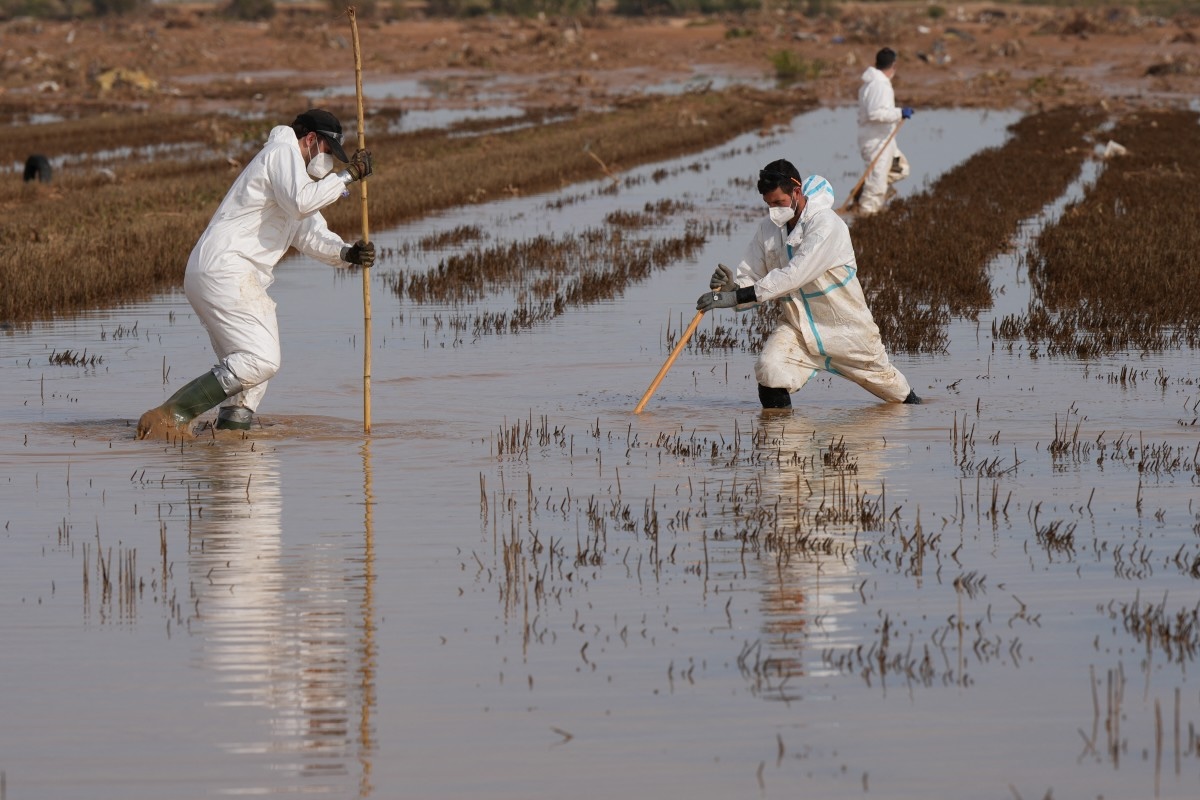
"The overflow of the ravine has washed away millions of kilos of plastic that are now scattered throughout the rice fields and in the Albufera itself, and at some point they will have to be removed, because if not, the farmers are going to work the field and incorporate it to the ground, and then it can no longer be recovered”, Eva Tudela, from Acció Ecologista-Agró, explained in an interview with news site RTVE.
A week after the devastating floods, Tudela went to assess the situation in La Albufera and found the area not only full of plastics, but also other more toxic waste derived from vehicle fuels, coolants, brake fluid and thousands of boxes of medicine.
EXPLAINED: How Spain's floods will disrupt travel for weeks
The Albufera Natural Park includes some of the municipalities most affected by floods, such as Alfafar, Massanassa, Catarroja, Sedaví and Albal and the fear is that the overflow of sewage from these villages has also affected the park and its rice fields.
The removal of waste has not yet begun due to the fact that rescue work is still underway. Divers and boats, continue combing the area to locate missing persons, whose bodies could have been dragged here during the floods.
Tudela is worried: "Our rice will be grown here next year. Are we going to spend 50 years eating plastic-poisoned rice?" she asked.
Others don’t have the same pessimistic outlook. "It is still early to be able to say with certainty what the effects will be in the short and long term," says Ignacio Moncho, technician at the Fundació Assut, a non-profit organisation that fights to preserve the area's coastal systems.
Moncho admits that a large amount of waste has been arriving in the park from the nearby ravines.
Nevertheless, the ecologist is trying to remain positive. "If quality water enters the area from now on, it will be diluted little by little and will recover," since wetlands "have a very great resilience and recover fairly quickly”.
One of the biggest current fears is that October 29th's devastating event destroyed urban and industrial wastewater treatment facilities, since the Albufera has a network of collectors connected to treatment plants that keeps it safe from this type of pollution.
"If these facilities have been affected, they will not adequately treat the water that is discharged into the channels, and the quality of the water will worsen," Moncho told RTVE.
"I understand that when the basic needs of the population are covered, which is obviously the priority, the recovery of the Albufera will be undertaken, with the removal of the waste, because if this is not done, it will affect the ecosystem in the long term," he warns.
All this not only threatens the rice used in the famed paella Valenciana, but also some of the vegetables which grow in the nearby area of Valencia’s Huerta, over 120 square kilometres of vegetable patches and fruit orchards where key ingredients for the paella such as the garrofón white butter beans and green beans are grown.
Whether or not Valencian paella will be affected in the years to come remains to be seen, but what’s clear is that the region still has a long way to go to recover, from the damage to people and properties as well as to the environmental and agriculture.
Comments