
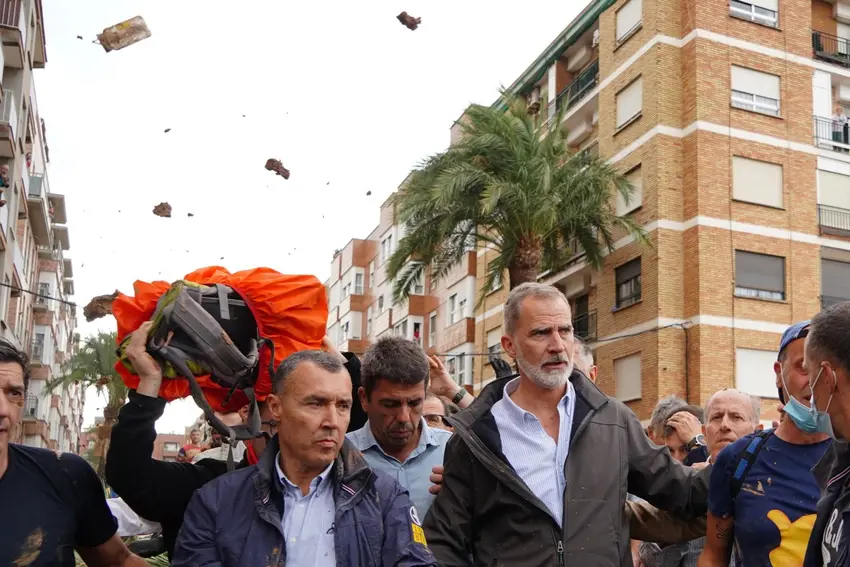
Furious locals pelted Spain's royals and premier on Sunday with mud and cries of "murderers!", forcing officials to cut short their visit to the town worst hit by the floods which have killed more than 200.
The angry crowd in the town of Paiporta focused most of its wrath on Prime Minister Pedro Sánchez and the head of the Valencia region, both of whom were whisked away by security.
King Felipe VI and Queen Letizia were hit in the face and clothes with mud as they tried to calm the angry crowd, AFP journalists saw.
Broadcast on Spanish television, the extraordinary scenes underscored the depth of the anger in the country over the response to the nation's worst such disaster in decades, with the toll ever rising and hopes for finding survivors ebbing five days on.
The king and queen arrived just after midday at a crisis centre in Paiporta, ground zero for a disaster Sánchez called the second deadliest flood in Europe this century.
But more security guards were soon called to stand between the royals and the rest of the delegation and the angry crowd, whose ire seemed most directed at Sánchez and Valencia region head Carlos Mazón, AFP journalists saw.
While Sánchez and the politicians quickly left, the king and queen spent an hour trying to calm tempers before leaving themselves.
Later public television said that their visit to the flood-hit region had been suspended.
Nearly all the flood deaths have been in the Valencia region, where Spain's meteorological agency on Sunday issued a fresh warning for heavy downpours in the region.
Up to 100 litres per square metre (22 gallons per square yard) of water could fall in places in the province of Castellon and the area surrounding the city of Valencia, the agency forecast.
It also sounded the alarm for torrential rain that may cause flooding in the southern province of Almeria, advising residents not to travel unless strictly necessary.
READ ALSO: Did Spain's flood warning come too late?
'Towns buried by mud'
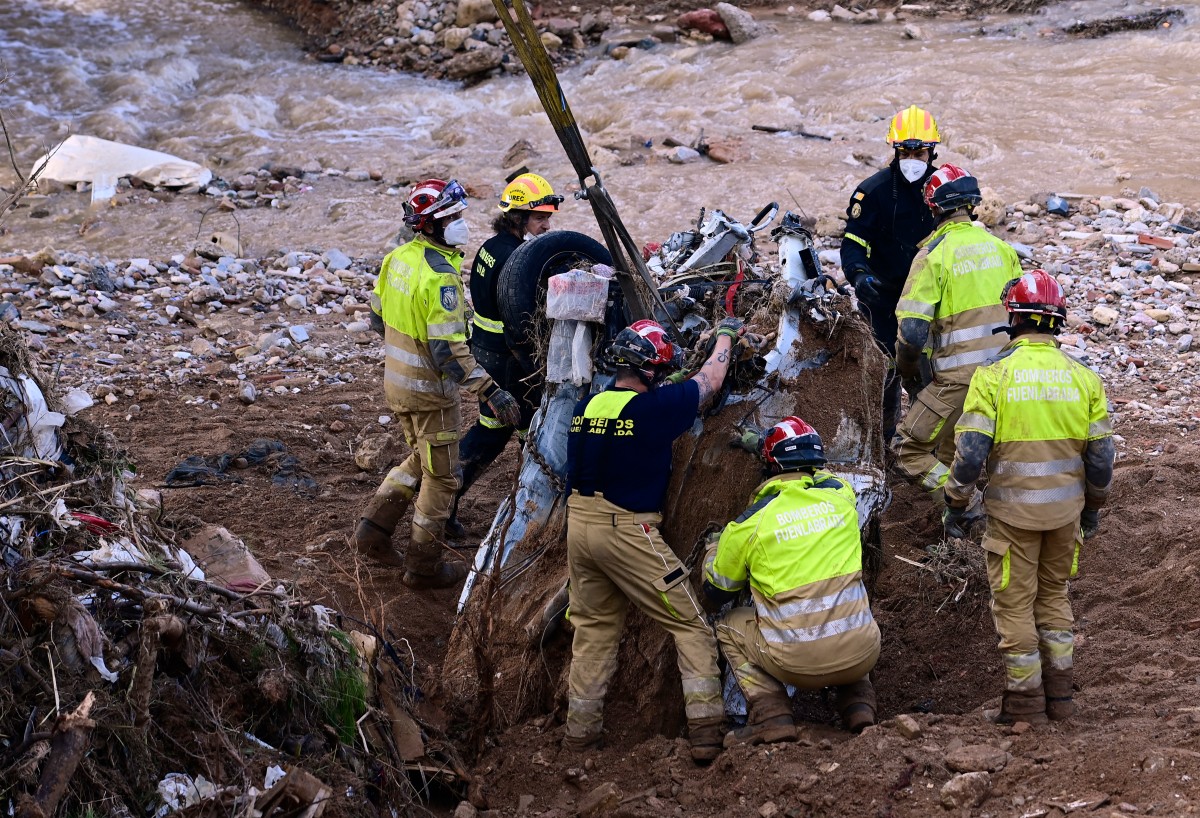
Since Tuesday's torrent of rain and mud swept away vehicles and devastated towns and infrastructure, thousands of security and emergency services have frantically cleared debris and mud in the search for bodies.
Authorities have come under fire over the warning systems before the floods, and stricken residents have complained that the response to the disaster has been too slow.
Mazón himself has faced fierce criticism for waiting until Tuesday evening to issue a phone alert in Valencia, despite his region being under an extreme weather warning since that morning.
"I am aware the response is not enough, there are problems and severe shortages... towns buried by mud, desperate people searching for their relatives... we have to improve," Sánchez said.
With the torrents of muddy water having wrecked towns and swept away cars, restoring order and distributing aid to destroyed towns and villages -- some of which have been cut off from food, water and power since Tuesday -- is a priority.
With Spain deploying an extra 10,000 troops, police and civil guards to the Valencia region, the country was carrying out its largest deployment of military and security force personnel in peacetime, Sánchez said.
In the ground-zero towns of Alfafar and Sedavi, AFP reporters saw no soldiers while residents shovelled mud from their homes and firefighters pumped water from garages and tunnels.
"Thank you to the people who have come to help us, to all of them, because from the authorities, nothing," a furious Estrella Caceres, 66, told AFP in Sedavi.
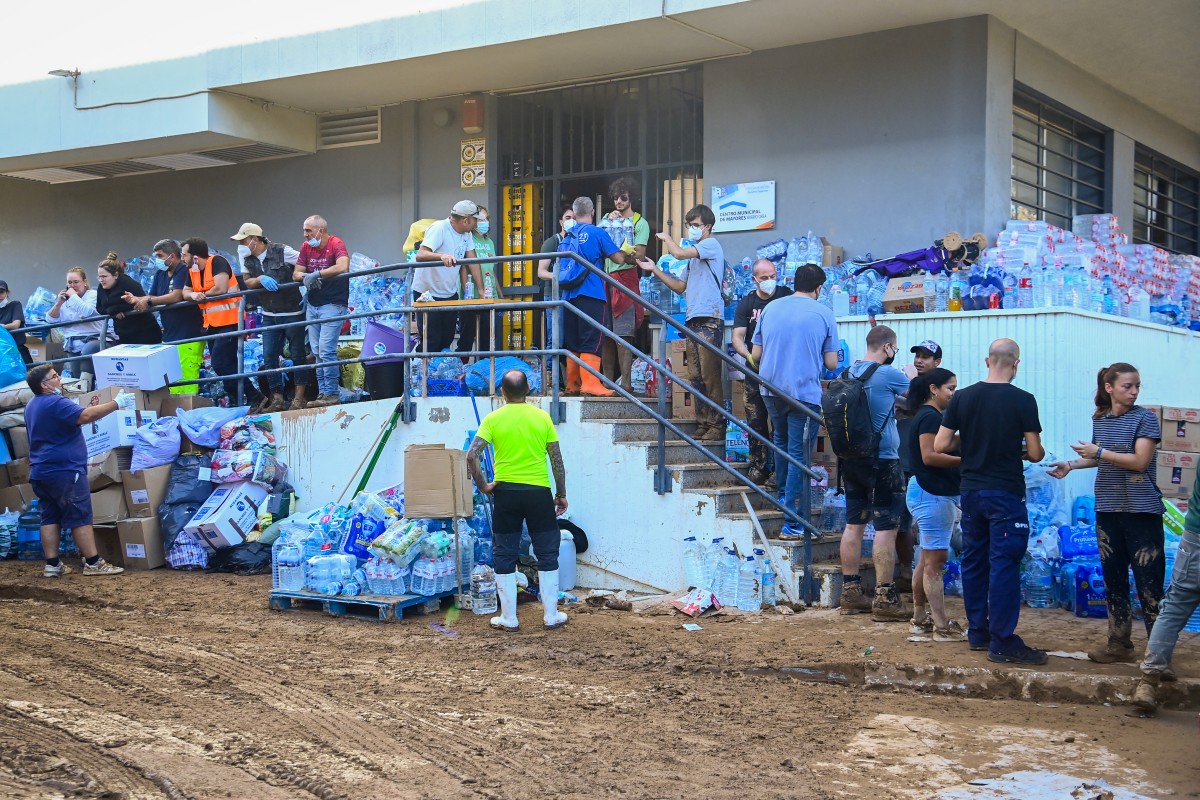
In Chiva, Danna Daniella said she had been cleaning her restaurant for three days straight and was still in shock.
"It feels like the end of the world," the woman in her 30s said.
She said she was haunted by memories of the people trapped by the raging floodwaters "asking for help and there was nothing we could do".
"It drives you crazy. You look for answers and you don't find them."
'Swiss cheese' motorways
With telephone and transport networks severely damaged, establishing a precise figure of missing people is difficult.
Sánchez said electricity had been restored to 94 percent of homes affected by power outages and that around half of the cut telephone lines had been repaired.
Some motorways have reopened but local and regional roads resembled a "Swiss cheese", meaning certain places would probably remain inaccessible by land for weeks, Transport Minister Oscar Puente told El País daily.
READ ALSO: EXPLAINED: How Spain's floods will disrupt travel for weeks
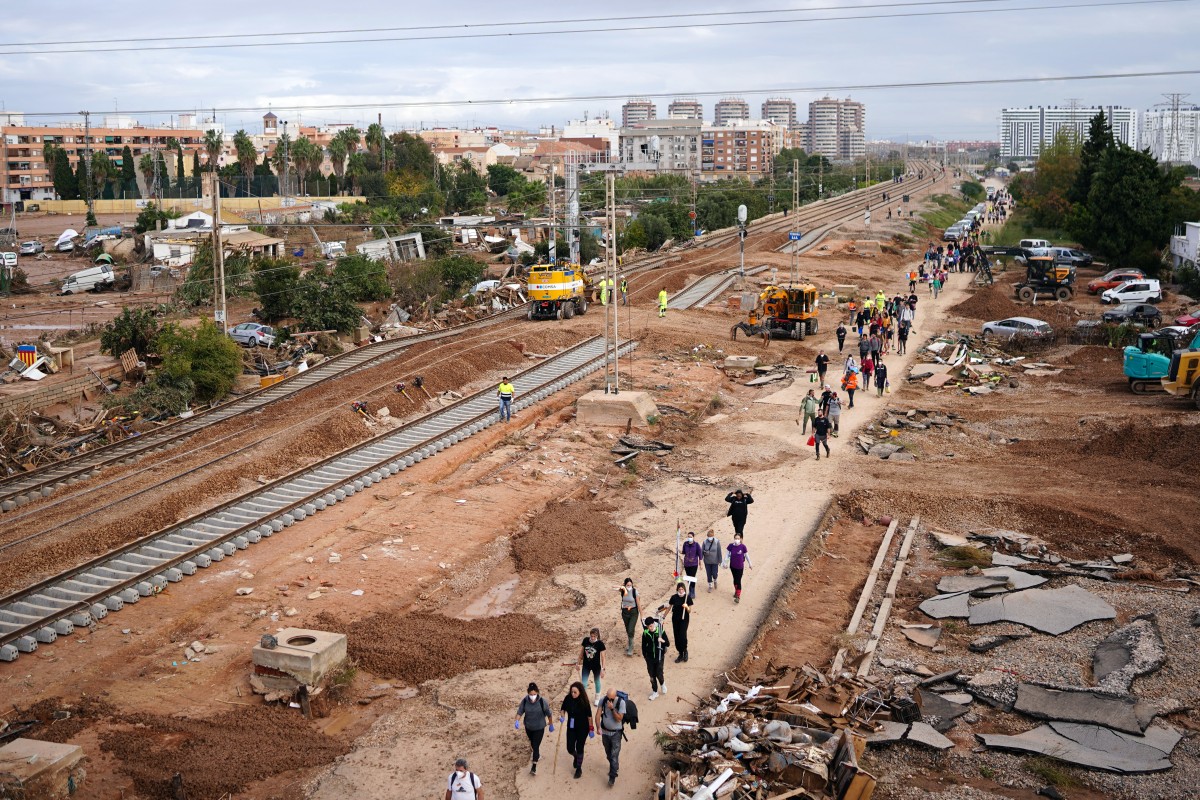
Ordinary citizens carrying food, water and cleaning equipment have continued their grassroots initiative to assist the recovery, although authorities have urged people to stay at home to avoid congestion on the roads that would hamper the work of emergency services.
On Sunday, the Valencian government limited the number of volunteers authorised to travel to the city's southern suburbs to 2,000 and restricted access to 12 localities.
Despite this thousands took to the streets of the city of Valencia's centre to make way to nearby communes on foot, carrying brooms and shovels to help those affected.
On Sunday, Pope Francis offered his prayers to those hit by the disaster "who are suffering so much these days".
The storm that sparked the floods on Tuesday formed as cold air moved over the warm waters of the Mediterranean and is common for this time of year.
But scientists warn climate change driven by human activity is increasing the ferocity, length and frequency of such extreme weather events.
Emergency services on Sunday updated the toll to 217 people confirmed killed.
It listed 213 dead in the Valencia region, one in Andalusia in the south and three in Castilla-La Mancha neighbouring Valencia, where the body of a woman in her 60s was discovered on Sunday.
Authorities have warned the toll could yet rise, as vehicles trapped in tunnels and underground car parks are cleared.
.
Comments (1)