
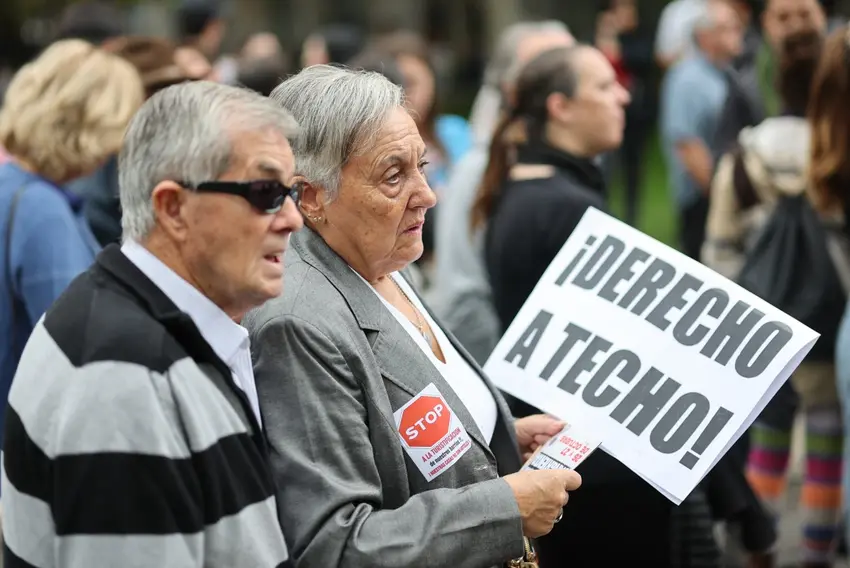
This week, Spain’s Housing Minister Isabel Rodríguez proposed “safeguarding” or “armour-plating” public housing and land in the bid to ensure more affordable homes for Spaniards in the midst of a deepening housing crisis.
But the suggestion comes a bit too late, 40 years to be precise.
? Pleno sobre la vivienda en el Congreso | Isabel Rodríguez: "Es necesario blindar el parque de viviendas, los suelos públicos y los esfuerzos que estamos haciendo para que sirvan al interés general para siempre"https://t.co/2qs2XbjtlC pic.twitter.com/ScnWU2ADkB
— Cadena SER (@La_SER) October 23, 2024
A new report from the Economic Cabinet of major Spanish trade union Comisiones Obreras has denounced the legacy of four “failed decades” with regard to the current housing market.
The biggest fallacy of all has been the disqualification and transfer to the private market of 2.7 million social housing units.
In other words, subsequent Spanish governments from 1982 until 2023 have allowed public housing to be bought up by private firms, or allowed private construction companies to first build public housing only for it to then fall into their hands, filling their pockets even further.
If these flats had remained in the public housing stock and public investment in housing had been effectively and correctly focused, the Spanish State would now have 4.7 million homes and have the EU’s fourth biggest housing stock, according to the report.
Instead, the current Spanish public housing stock barely exceeds 290,000 units, one of the lowest in the EU only above Greece, Cyprus, Latvia and Estonia.
READ MORE: Why Spain is looking to Vienna to fix its housing crisis
For four decades, Spain’s left and right-wing governments have allowed €162 billion of public money to go toward tax cuts for building private homes, benefiting wealthy taxpayers over those in need of public housing.
Now the Bank of Spain has calculated that the country is lacking 500,000 homes, most of which should be public.
There are clearly different reasons why rents and property prices are spiralling in Spain, but the State’s responsibility in selling off the country’s public housing should not be ignored.
READ ALSO: 'Red tape takes longer than building homes in Spain'
In other matters, drought problems have increasingly made the news in recent years in Spain, not least because 75 percent of the country is at serious risk of irreversible desertification.
2024 has been a rainier year on average, with many reservoirs reaching levels they hadn’t seen in years, reaching 50 percent capacity.
But there’s another water problem that Spain will have to face in future that isn’t just about scarcity, but the pollution of the water we drink.
Nearly 200 Spanish municipalities contain nitrate levels higher than those established by European and Spanish regulations.
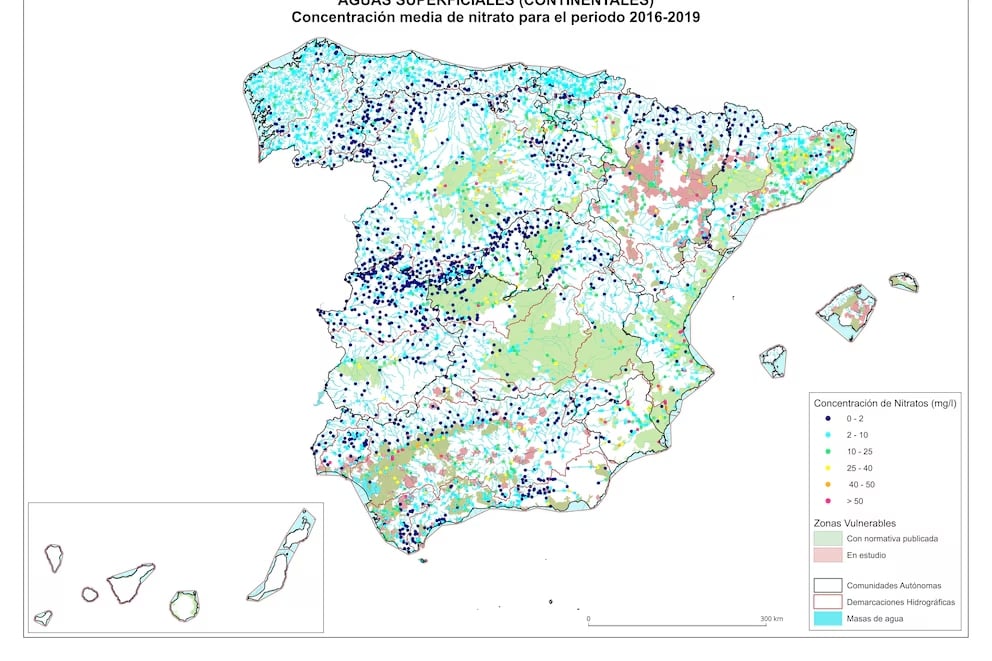
In fact, the European Court of Justice fined Spain last March for failing to prevent nitrates in its tap water.
Brussels pointed out that Spain had not raised the alarm over 82 contaminated areas in Castilla y León, Extremadura, Galicia, the Canary Islands, the Balearic Islands, Madrid and Valencia as being vulnerable to nitrates.
50 mg/l of nitrate ion is the maximum guideline value that the World Health Organisation establishes for drinking water to avoid health problems in the most vulnerable groups and “to a lesser extent in the general population”.
Large-scale agriculture and livestock farming are the primary causes of this contamination of nitrates and pesticides in underground basins and surface water reserves.
The latest report from the Andalusian Government reveals an increase in toxicity in the Guadiana, Guadalquivir and Mediterranean basins due to the poor implementation of the EU directive in Spain vis-à-vis controlling these chemicals.
According to Ecologists in Action, more than 200,000 people in Spain consume tap water that’s polluted by high levels of nitrates, and those living in villages or in underpopulated areas known as "Empty Spain" are bearing the brunt of this.
Comments