
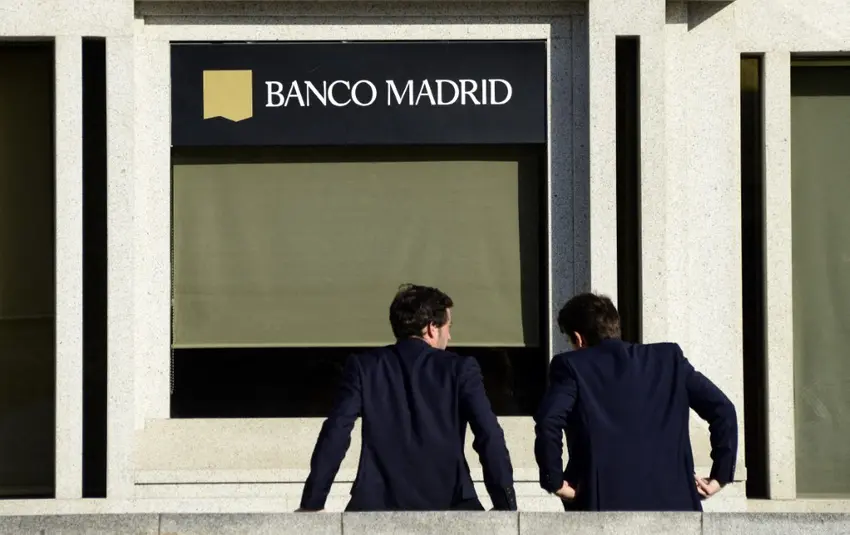
It’s a gripe of many foreigners in Spain — why do banks close for the afternoon?
As you’ve probably noticed, most banks here close at around 2pm or 3pm, and they don't open after lunch as is the case with many shops and other businesses.
In some cases, the hours banks are open to the public are even shorter during the summer period, and certain operations such as depositing or getting cash from a teller can only be performed on one or two days a week.
Of course, cash points are open 24/7 so you can still withdraw and deposit cash, and some machines even allow you to pay certain taxes there.
But generally speaking, the shortened timetable means that any banking matters you need to get done must be carried out during the morning or early lunchtime, when you’ve likely got work or other responsibilities, including sitting down to eat.
As most other people are in the same boat, there’s often a surge in people arriving at any given Spanish bank branch at 1pm or 1.30pm, just as the staff are beginning to look forward to winding down for the day.
This early closing practice is nothing new. It’s been this way for decades, and Spain is pretty much on its own when it comes to other countries. An El País article from all the way back in 1998 said as much: “The opening hours of Spanish banks are an exception… In large European countries, financial institutions open in the afternoon and carefully manage their opening hours on Saturdays.”
Sadly we’re now in 2024 and not much has changed in Spain since then.
READ ALSO: Can you use €100, €200 or €500 banknotes in Spain?
Why do Spanish banks close so early?
It’s hard to say exactly why Spain is so out of sync with other European countries when it comes to banking hours. However there seem to be two generally accepted reasons.
The first is, as with many things in Spain, this seems like a good old-fashioned case of the Spanish status quo – it’s always been like this, it works (does it work, and for who?!) and therefore nobody questions it.
This sort of logic is sadly quite common in Spain. These sorts of inefficiencies and quirks are deeply embedded in Spanish bureaucracy, whether it be the herculean task of getting an appointment at the immigration office or simply wanting to speak to a staff member while three sit around chatting - all of this is pretty much just accepted here.
Nobody in Spain bats an eye about these habits and it seems that everyone here accepted long ago that banks aren’t open in the afternoon.
In fairness, this could also be a more sector-wide tradition, not a uniquely Spanish thing. Before banking became digitalised, bank clerks had to spend the afternoons counting and writing up the books for all the transactions they'd handled that morning.
Twenty-five years on, some processes may have become easier, but it is still common for bank staff to work in the afternoon, they just do so behind closed doors rather than being open to the public.
The second reason is effective trade union representation in the banking sector, and cushy collective bargaining agreements that limit the hours and timetables banks open. Some may argue that working from 8 to 2 still represents a six-hour shift without a break, but is it actually practical for customer for that to be the set-up.
With the government proposing a reduced working week, combined with the increasingly online world and digitalisation of the banking sector, bank branches across Spain are and will likely continue to close at a rapid rate.
Spanish banks closed 213 branches in the last year and slimmed the number down 1970s levels. The total number of branches has fallen by a staggering 62 percent since its peak in September 2008, according to figures from El Español.
Some argue that the reduced profitability that comes from face-to-face customer service rather than selling banking products and generating commission is another reason why Spanish banks don't 'waste time' staying open to the public.
READ ALSO: How rural Spain is rebelling against rampant bank closures
Some solutions
Fortunately, in Spain there are some banks that do actually open for brief periods on certain afternoons. Note that this is likely dependent on where you live and your local branch might not follow these timetables.
According to Rankia, Sabadell opens in the afternoon but only on Thursdays from 8:15-18:30 from October to March.
ING is open from 8:00-19:30 from Monday to Thursday from September to June, and in summer it is open from 8:00-18:30.
Cajamar bank also opens during the afternoons from Monday to Thursday, and Bankinter stays open until 16:30 until the summer.
On Thursdays, Kutxabank opens from 8:15-14:15, and reopens from 16:45-19:30.
It’s also worth noting that certain banks do also offer appointments (known as a cita previa in Spanish) in the afternoon, though it may not be in your local branch and it won’t be open to the general public during this time.
In writing this story, The Local spoke to the bank manager of an Abanca bank branch, who said it is possible to get seen after 2pm but only for certain commercial affairs (taking out a mortgage etc) and with a cita previa which can be made by the app - a system resembling that of civil servants in country's public offices.
Many banks also have online chat and WhatsApp services, but the increasing lack of face-to-face customer service has angered Spain's elderly population in particular, with a campaign called "I'm old, not stupid" making waves in 2022.
At the end of the day, Spanish banks' early closing times are just one of those things to get used about life in Spain. As infuriating as it may be, there are plenty of other aspects about life in this country that make up for it.
READ ALSO: How to get a 'cita previa' (appointment) in Spain when it seems impossible
Comments