
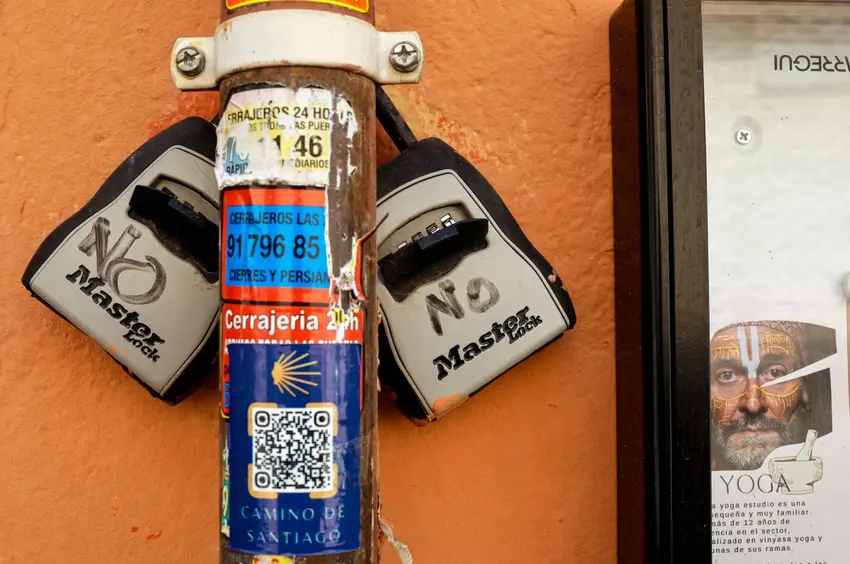
Just over a week after anti-mass tourism protests in Barcelona took a slightly more hostile turn when a few demonstrators sprayed holidaymakers with water pistols, there’s been another incident which goes beyond the usual “tourists go home” message graffitied on walls or chanted at marches.
According to leading Spanish daily ABC, several lockboxes in the central Alameda area of Seville have been soiled with excrement. ABC is the only newspaper to report on this so far.
?Boicotean con excrementos candados de pisos turísticos del entorno de la Alameda. Coincide con el debate abierto en la ciudad sobre la limitación de los mismos propuesta por el gobierno de José Luis Sanz y que el PSOE de momento no apoya https://t.co/qURgl0fhd9
— ABC de Sevilla (@abcdesevilla) July 15, 2024
They have accompanied the article with an image of a lockbox covered in what looks like dog excrement.
Lockboxes are used as a way for guests to access the keys to a holiday let without the owners having to hand them over in person.
They share the code with the holidaymakers privately, who then have to pull down the slap, line up the numbers and open the box.
Lockboxes have sprung up all over Spanish holiday hotspots but also in residential neighbourhoods, serving as evidence of how some popular areas are being ‘taken over’ by Airbnb-style holiday lets.
READ ALSO: Should I cancel my trip to Spain because of the tourism protests?
ABC reports that it appears to be an isolated incident that has taken place just as the mayor of Seville José Luis Sanz presented the first proposal to limit short-term let licences for these flats.
The measure has so far been blocked by the opposition Socialist party led by Antonio Muñoz, who argues the restrictions should be tougher, as the PP’s proposal would allow 23,000 more tourist apartments in the Andalusian capital (mostly away from the city centre).
Now it looks likely that no measure will be passed before September as plenary sessions end for the summer.
According to AirDNA, a consultancy company specialising in short-stay apartments that Seville City Council has used as a reference for its regulation of the market, the average holiday rental in the city makes owners €35,000 a year.
On the other hand, a long-term rental unit makes Seville landlords €10,300 a year on average.
READ ALSO: Which cities in Spain have new restrictions on tourist rentals?
The booming tourist apartment market is increasingly being targeted by protesters as one of the chief problems residents face, as their proliferation means they have fewer long-term rentals available and pay far more for them in recent years.
Rents reached a record high in Seville in June 2024 at €11.5 per square metre, meaning that a 100sqm flat now costs €1,150 to rent on average.
OPINION: Spaniards should blame landlords, not tourists
Spain’s national government is trying to pass legislation which targets this problem, whilst also encouraging local and regional governments to get tough on holiday lets.
So far, Barcelona is the only city to truly commit to banning Airbnb, after its mayor recently announced plans to scrap all holiday lets by 2028.
READ ALSO: Can Barcelona really ban all Airbnbs?
Comments