
Many foreigners move to Spain hoping to set up their own business instead of trying to compete for local jobs. Because of language reasons and Spain’s popularity as a tourist destination, businesses aimed at tourists are often the go to for new business ventures. Either that or those aimed at other foreigners.
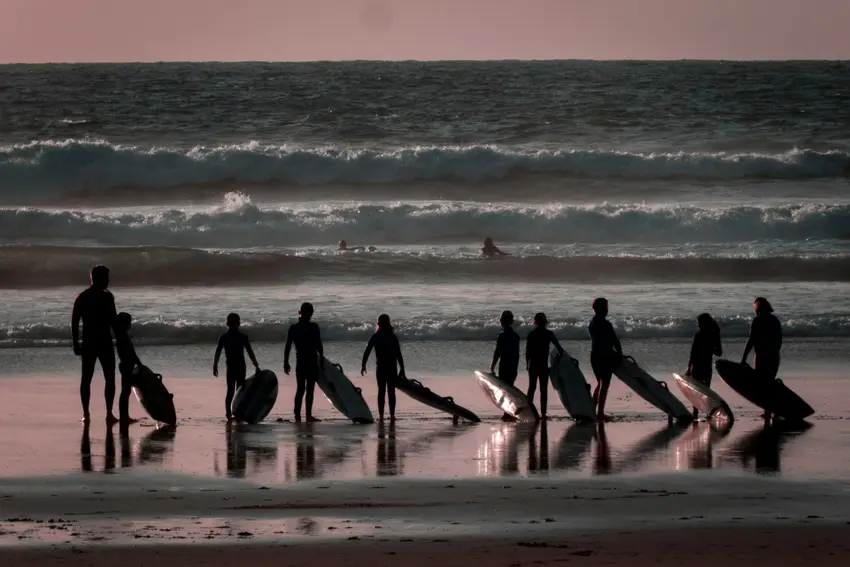
If you love nothing more than catching a wave, are pretty good at it and have qualified as an instructor, opening a surf school may be a dream you’ve had for a while and Spain may be the perfect location.
The Basque Country is one of the best areas for surfing in Spain, while Cantabria, Asturias and Galicia get their fair share of surfable waves too.
Further south, around Cádiz is the big surfing hub in Andalusia, as well as much further south around the Canary Islands. Lanzarote, Fuerteventura, Tenerife and Gran Canaria all get decent Atlantic swells.
The Mediterranean is not really known for surfing as the waves are rarely big enough, but even big eastern coastal cities like Barcelona and Valencia, as well as smaller touristy towns have surf schools, which can be great for beginners.
If you’re serious about setting up your surf business, there are several steps you need to take before you can get it off the ground.
Legal steps
The first step is to register as an active tourism company. You must register with the relevant tourism authority in the region you want to set up in and meet the specific requirements of that area as they may differ slightly depending on where you are in the country. The Sports Law may also require you to register with the official sports professionals list, but it depends on the area of the country you’re opening your studio in and what the regional laws say.
Secondly, you need to apply for what’s known as a public domain occupancy license, because most beaches are publicly owned in Spain. You need to apply for this authorisation from your local council or town hall.
The next step is to ensure that you and your school have all the relevant permits and qualifications in order to be able to teach surfing in Spain. You must be qualified both as an instructor and as a lifeguard to meet safety requirements.
It’s a good idea to display any qualifications you have up in your school so that students have confidence in your abilities.
READ ALSO: Eight mistakes to avoid when setting up a business in Spain
For example, if you want to set up an Official Surf School you need to meet the standards and qualification levels set by the Spanish Surf Federation (FES). For this instructors must hold a FES surf instructor and/or coach qualification or a qualification validated by FES or by the Regional Federation affiliated with FES. Preferably, you should hold a Level I National Surf Coach certification. To be an Official Surf School, you will also need to pay an annual fee to FES, which will get you a certification and list on their website.
It is mandatory for any surf school to have civil liability insurance and accident insurance to cover all students, so it’s important you get these before beginning any classes.
Next you must make sure you register for tax before opening your school. You can register either as self-employed (autónomo) or open a limited company here in Spain, depending on the size of your school and if you have any employees. You will also need to register with social security and pay your monthly fees, as well as making sure you comply with VAT obligations etc.
If hiring other instructors, you will need to make sure they have the relevant qualifications too and that you have occupational risk prevention in place, as well as a legal employment contract and accident insurance for them.
FES states that there should be a maximum of 8 students per monitor or instructor.
Lastly, in terms of legal matters, if you are going to be managing customer data such as names and contact details you will need to make sure you abide by data protection laws here in Spain.
READ ALSO: 11 tourism business ideas that can work in Spain
What you need to operate your surf school
With regards to your surf school itself, you must ensure it has the appropriate facilities such as changing rooms, toilets and showers.
It will also need to be fully equipped with boards, wetsuits etc. as well as rescue and first aid equipment.
Of course there are lots of other factors involved in setting up a surf business. You need to be able to think of your online presence, build a website with a bookable system, market yourself, decide on the branding and work out how much you're going to charge based on your competitors and your costs.
Once you have your classes off the ground, you might want to think about offering extras too like renting out standup paddle boards, setting up a surf shop on the premises and even hold surf camps so that students can come for several days to improve their skills.
Comments