

The rapid proliferation of tourist flats (pisos turísticos in Spanish) has become a big issue in Spain in recent years.
In fact, they’ve become so maligned among many locals that they've even inspired anti-tourist and anti-Airbnb graffiti across the country. This is partly due to concerns about gentrification but largely down to housing shortages and their impact on regular rent prices — as one common graffiti scribble and protest message puts it: tu Airbnb era mi casa (your Airbnb was my house).
To be clear, many of these tourist rentals are legal, but there are tens of thousands that are not. In October 2024, Spain's Housing Ministry calculated that there were 30,000 unlicenced and therefore illegal tourist apartments in the country, although given the fact that many are under-the-radar, the true number isn't really known.
It's also important to distinguish between the different categories of tourism accommodation. Those considered the most damaging to Spain's housing crisis are tourist apartments in residential buildings in cities and towns, pisos or apartamentos that could otherwise be used as long-term rentals for residents.
However, the fact that in some parts of the country tourist apartments can earn landlords four times as much by 'Airbnb-ing' than renting to tenants makes it a no-brainer financially speaking.
In Spain’s big cities and tourist hotspots, thousands of illegal and unregulated tourist flats are undercutting the dwindling social housing supply and inflating the price of what’s left. The opportunity of making a sizable profit is too big to ignore for those with tourist flats, even if they can't get a licence to rent in this way and therefore break the law.
READ ALSO: Spain's Valencia to fine illegal tourist apartments up to €600,000
Spain's capital is said to have the most serious problem with illegal tourist apartments, with estimates suggesting up to 93 percent could be unlicenced. A report from early-2024 suggested that only 277 of the 24,000 tourist apartments in Madrid had a licence.
Local police in Valencia saw a seven-fold increase in the number of illegal tourist apartments reported in 2024, with 620 compared to 84 in 2023, but the true number probably puts it in the thousands too.
Faced with last year’s anti-tourism protests, governments at all levels, from Pedro Sánchez in La Moncloa all the way down to small town municipal councils around the country, have started talking up a crackdown on illegal tourist lets. In Valencia, the town hall has pledged to fine illegal tourist apartments up to €600,000. Similar threats have been made around the country.
But the truth is, beyond the words, not a great deal has been done about it yet. Why is that? Why is Spain finding it so hard to police illegal tourist lets?
Some recent case studies from the Spanish media help us better understand.
In the Canary Islands, one of the epicentres of Spain’s anti-tourism wave last year, inspecting tourist accommodation has been described as “an almost impossible mission” with local councils warning they simply don’t have enough inspectors to keep on top of the sector.
The law regulating holiday flats in the Canary Islands requires local authorities to draw up a “verification and control plan” for all properties within eight months of its entry into force. Town councils should inspect each and every one on the islands, of which there are more than 50,000, and take action against those that do not comply with the law.
The problem? In many towns, like Teguise in Lanzarote, for example, implementing the plan is basically impossible due to staff shortages.
“We are not prepared. We only have two people in the department. It's going to be real chaos,” the town's tourism councillor, Rita Hernández, said recently in the Spanish press.
In Málaga, another tourist hotspot, local authorities are being forced to outsource their inspections of tourist accommodation due to shortages.
Local newspaper Málaga Hoy reports that “a private consultancy firm will be responsible for monitoring and enforcing the town planning regulations” owing to a lack of staff.
Looking at the numbers, it’s easy to see why. The local council has just seven civil servants for the 79,277 registered tourist lets. If the workload was to be evenly distributed, each inspector would be responsible for 11,325 flats each.
If they wanted to check all the registered properties in a year, they would have to inspect 31 every day, without a day off. If they worked only working days (260 a year), it would be 43 and a half flats a day.
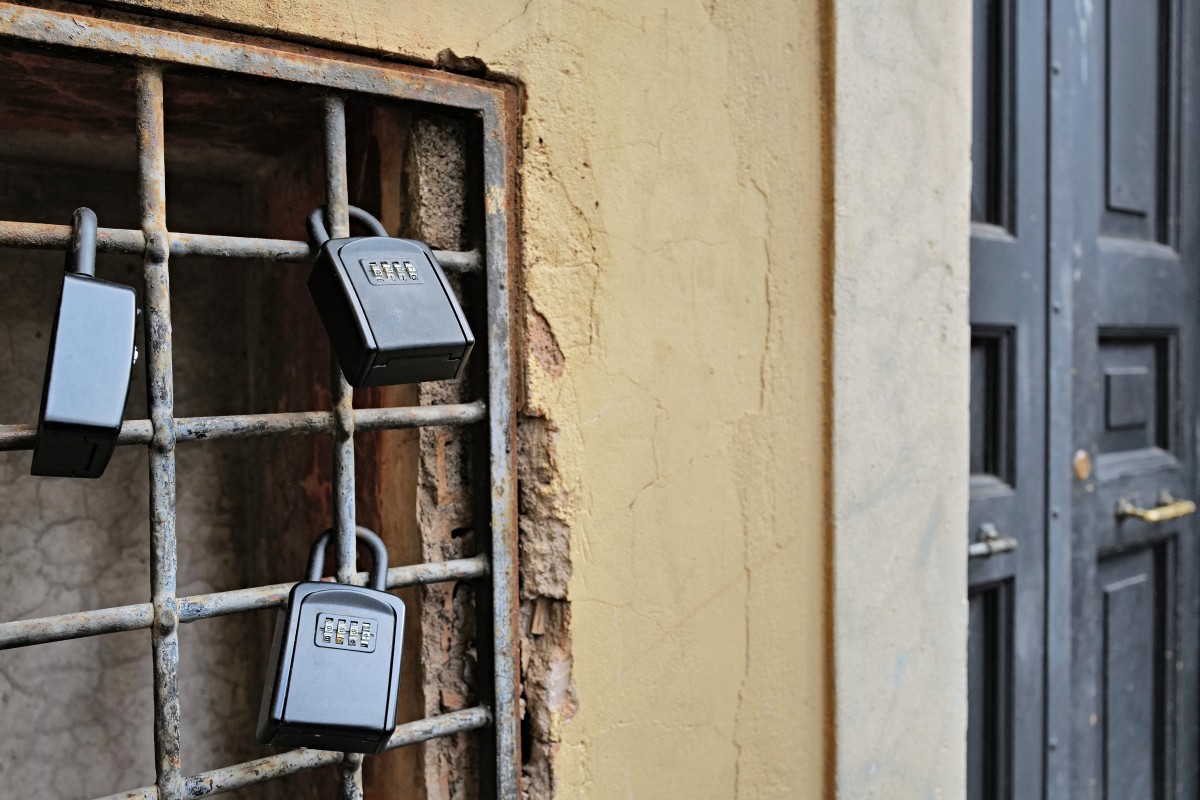
All this, of course, doesn’t even include the unregistered flats. Local media reports there being hundreds, but judging by other big cities the true number is likely somewhere closer to the thousands overall.
Not only does that combination of workload and uncertainty make it difficult to police, but on top of that tourist inspectors are also responsible for hotels and rural accommodation. In 2022 alone, there were 530 hotels, 369 hostels, and 5,460 rural accommodation establishments in the province.
Of course, manpower shortage aside, whether it's in Málaga or the Canary Islands or around the rest of Spain, inspectors can only police illegal rentals when they know they exist. That is to say, when they've been discovered or reported by locals. Without that, inspectors (however well staffed) can do very little.
In Alicante, the council is stepping up inspections to detect and penalise illegal tourist flats. Local police, which has until now been in charge of enforcement, are to receive support from other forces and civil servants, who will receive training so they can speed up the inspection process.
In recent months, around a hundred infringement notices have been issued on the Costa Blanca city.
In the capital, the situation is worse. Madrid council's urban planning inspections are proving to move much slower than the rate at which the tourist market is growing in the capital.
Data from the town hall shows poor results in terms of the closure of unlicensed tourist accommodation: last year, 251 Airbnb flats were successfully reverted to residential housing, out of the 14,969 currently operating without a licence in the capital — just 1.5 percent of the total.
However, reporting from El Diario estimates that in just six months alone 2,259 unauthorised tourist flats opened in the city. In other words, for every ten new openings, inspectors only manage to close one illegal flat.
One opposition councillor blamed this inactivity on, you guessed it, a lack of inspectors, “which are the same 14 that there were in 2023” he said.
READ ALSO: How the rules for tourist lets in buildings in Spain change in April
Comments