
When you think of an NGO, the first thing that comes to mind may be an organisation helping the homeless, perhaps an animal shelter or an international body specialised in providing food and water to children in Africa.
But we’re willing to bet that you don’t equate an NGO to an organisation that helps average Joes find a place to rent.
With Spain’s current housing crisis, this is exactly what has emerged in the Canary Islands.
NGO Provivienda is buying up homes across the Atlantic archipelago and renting them out at affordable prices - €340 per month roughly.
The ONG (as an NGO is called in Spanish) takes on all the other costs such as community fees, property tax (IBI), rubbish collection fees and insurance.
The beneficiaries agree to rent for seven years although the rental contracts can last for several decades.
The tenants are selected based on their income, but they’re not as low-earning as you may think: the total annual family income cannot exceed three times the IPREM index (€20,844 gross per year), which showcases just how bad the rental situation has gotten in the second region with the lowest wages in Spain.
Provivienda’s director Fernando Rodríguez has called his NGO "a pioneer at a national level" as "until now, the development of public housing was in the hands of the Spanish government and secondly that of developers".
"We have become the third provider of social housing in Spain," Rodríguez told Cadena Ser radio station.
In 2024, 40 flats were rented out and by the end of this year Rodríguez hopes to have a stock of almost 100 well-priced rental units to offer in Las Palmas de Gran Canaria, La Laguna, Arona, Santa Cruz de Tenerife and other stressed rental markets in the Canaries.
Provivienda’s capacity to alleviate the "structural problems" of the islands’ rental market has led the Canary government to come onboard and now pay around 60 percent of the cost of the homes purchased by the NGO.
Above all, the sheer existence of Provivienda exemplifies how average-income renters in some regions in Spain are now deemed “vulnerable” and very much in need of help.
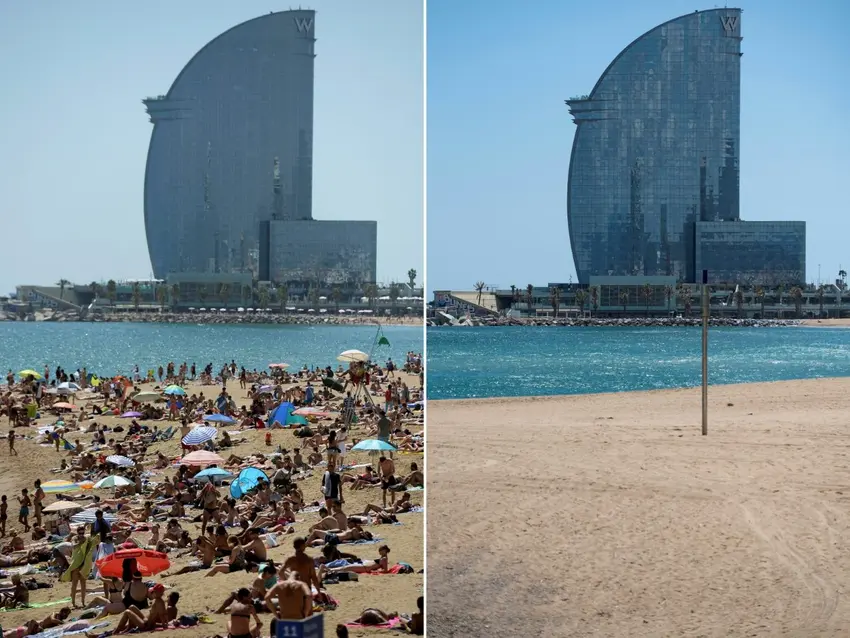
In other news, yesterday January 31st, marked five years since Spain confirmed its first case of Covid-19, a German tourist on the tiny Canary island of La Gomera.
A month earlier, health authorities in the Chinese city of Wuhan had warned the international community about the virus. And boy, how our lives changed!
What was initially viewed as an isolated situation soon turned into a global pandemic that transformed the lives of billions of people and pushed the world's health, economic and social systems to the sheer limit.
Were you in Spain when the national lockdown turned cities into ghost towns in mid-March? Can you remember the ever-increasing death toll and the harrowing news of elderly people left to die in care homes in Madrid? The clapping for the health workers at 8pm? The face masks selling for €10 each on the black market, the quarantine and curfew rules, the sense of freedom after two months of confinement, the end of Spanish greeting habits, the constantly changing rules for the hospitality and retail sectors, the vaccine rollout, the Covid variants, the travel lockdowns and yearning to see family members abroad?
Covid-19 marked all of us in one way or another; many lost loved ones, their jobs, their freedom, their routine.
Was there a before and after for Spain as well? It’s still very much the same country but there has been a shift.
Firstly, that surge in international travellers after months cooped indoors saw Spain continue to increase in popularity, with more tourists than ever.
Overtourism and gentrification, combined the so-called ‘supply-chain issues’ and inflation caused by Covid and/or Putin’s war in Ukraine, have meant that Spain is now a busier and more expensive country than it was five years ago.
We pay more for that twice-weekly shop at Mercadona, more for that two-bedroom flat ten minutes’ walk from the city centre, and more for that Easter week escape at our favourite hotel on the coast.
Was it all Covid’s fault? Probably not, only partly, who knows. Life is still good in España but life was probably simpler, and cheaper, five years ago.
Comments