
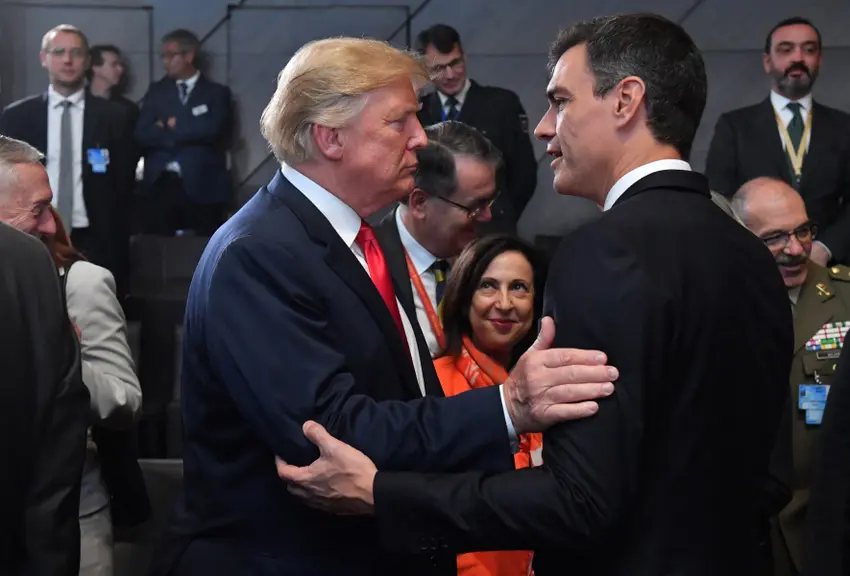
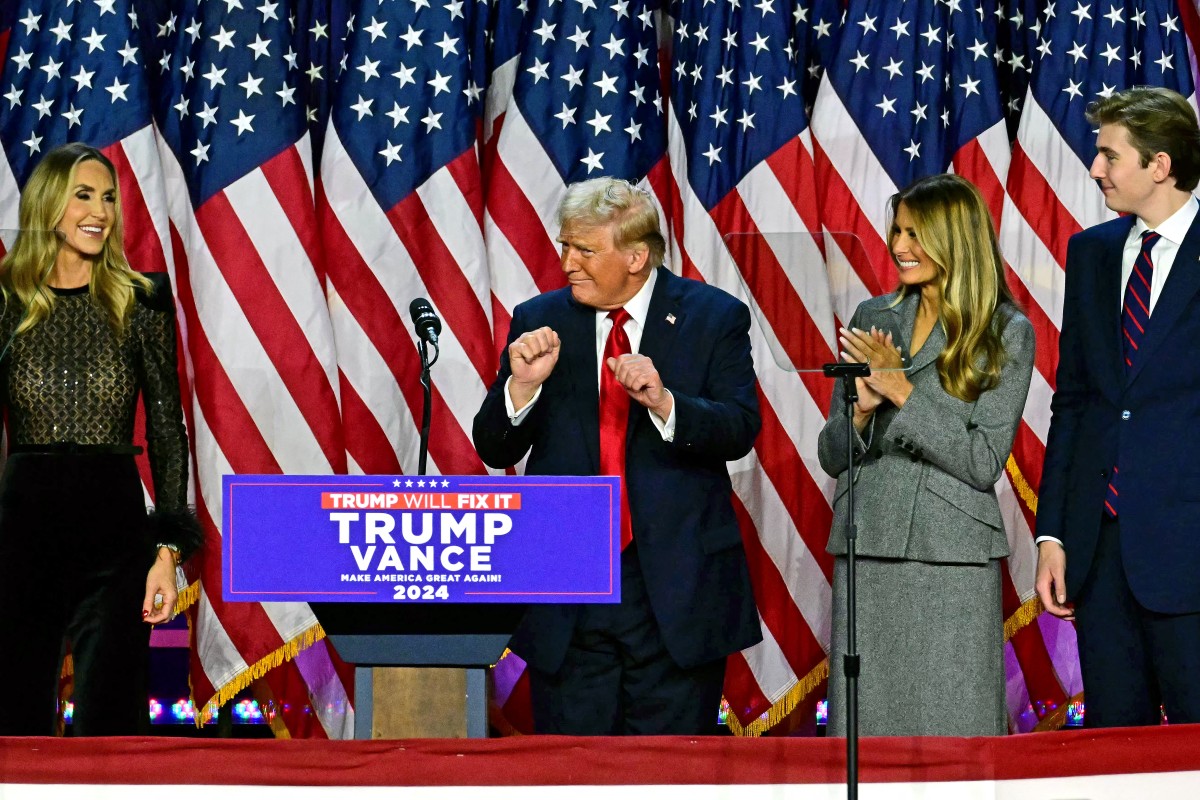
On Monday January 20th 2025, Donald J. Trump was sworn in as the United States' 47th President.
As the U.S is the world’s global superpower, who is in the White House has political, economic and cultural ramifications around the world. Spain is no different, and Trump’s re-election could impact life in Spain in many ways.
READ ALSO: Americans in Spain - Share your feelings about the US election
As one of Europe's few left-leaning governments, Madrid would have certainly hoped for a Kamala Harris presidency and Spain in particular could now have a few difficulties in dealing with the White House moving forward.
Global conflicts and defence spending
Trump returns to the White House at a time of far greater geopolitical uncertainty than when he first won in 2016. Whether it be the war in Ukraine or conflict in the Middle East, in the 2020s war and global alliances have returned to the front and centre of politics in a way they haven’t for decades.
Trump’s long-held scepticism towards NATO, and his more general isolationist, 'America First' foreign policy will worry Madrid and capitals around Europe. He’s repeatedly criticised NATO, something that could lead to a reduced US military presence in Europe and increase vulnerability to global threats.
He’s also long demanded that European nations pay a greater percentage of GDP on defence spending and generally shoulder more of the burden of international defence costs. If he stays true to his word, which seems likely, Spain and its European partners may not only have to take on greater defence and security responsibilities but also to significantly increase defence spending in order to make up for the shortfall from the United States' step back.
If European nations are reluctant to do so, Trump could even threaten withdrawal from NATO entirely to force them to pay up. In 2024 Spain had the lowest levels of defence spending among all NATO members, 1.38 percent of GDP in 2024, so would likely be at the top of Trump’s list of grievances.
However, it's not all necessarily bad. Even if Spain is forced to increase defence spending, something that will inevitably have knock-on effects on the wider economy, it could also incentivise greater investment in Spain's defence sector, generating growth and employment in an industry with potential for expansion into the European market.
Similarly, during his first term Trump pulled the U.S out of the Paris climate change accords, and has hinted he will do the same again. If this happens, Spain could also take on a greater role in the renewable energy sector.
READ ALSO: Where are the US military bases in Spain and why are they still there?
Wars
Then there’s also the two ongoing wars Trump will inherit. How he’ll manage them remains to be seen, but Trump has in the past shown a more conciliatory stance towards the Kremlin, which could alter the geopolitical balance in Europe and provoke changes in the EU's sanctions policy and leave eastern European counties feeling more vulnerable.
In terms of the Middle East, a region of great importance for Spain's strategic and energy interests, should Trump decide to modify the American stance, Spain could be affected, especially with regard to the stability of the Mediterranean coast and trade routes.
On a political level, Spain’s outspokenly pro-Palestinian position could complicate relations with Washington. The U.S, regardless of whether the Democrats or Republicans are in office, is an exceedingly pro-Israeli country, but during his first term in office Trump went beyond even those norms and took deliberate steps to show support for Israel, notably moving the American embassy in Israel to Jerusalem.
READ ALSO: Why does Spain support Palestine?
Spanish economy and exports
A Trump presidency could also have significant ramifications on the Spanish economy, not only increased defence costs but in particular through tariffs.
During his campaign, Trump threatened to levy tariffs on imports from pretty much every country in the world. It forms part of his broader argument that the U.S is bankrolling the rest of the world for little in return.
In his first day in office, the re-elected US president didn't roll out new tariffs but he did signal they were soon to come.
A tougher tariff policy would be particularly damaging for Spanish exports, as Trump has proposed tariffs running from 10-20 percent on all imports, which would seriously affect the 28,000 Spanish companies that export to the US.
The car sector, which makes up around 10 percent of Spanish GDP and relies heavily on American trade, would be especially vulnerable, as would exports of consumer and luxury goods such as cheeses, wines, olive oils, jamón and cava.
A protectionist turn in Washington could force Spain to strengthen trade ties with other emerging markets, such as Latin America and Africa.
READ ALSO: What does Trump think of Spain?
Immigration
Immigration was a pillar of the Trump campaign in 2016, 2020 and again this time round, in 2024.
Restricting immigration has been one of Trump's key policy promises, and if fulfilled it could theoretically affect Spanish citizens living in the U.S. and those who aspire to work or study there. However, the main focus of the Trump campaign has been illegal migration to the US, whilst Spanish emigrants to the States overwhelmingly use legal migration paths.
Going the other way, with Trump back in power many Americans will now be searching for a way to leave the country. As such, Spain could see an influx in American migrants in the coming years.
This would be continuing an ongoing trend of Americans moving to Spain in recent years.
READ ALSO: LISTED: The visa options for Americans who want to move to Spain
Politics and culture wars
Then there’s the politics of this all. As the global superpower, America in many ways sets the political temperature around the world.
On a diplomatic level, Spain will now be dealing with a paradoxically well-known but unpredictable quantity. It’s hard to judge Trump’s mood on something from one day to the next, and his decision making can be erratic. Spain's Foreign Ministry and diplomatic core will have its hands full for the next four years.
Spanish Foreign Minister José Manuel Albares has so far opted to maintain cooperation with the new United States Government, but has announced that the priority will be the European project and the interests of Spain. "Whatever their name is, if they challenge us, we will face them,” Albares said.
The fact that Spain is governed by a left-wing coalition led by Sánchez’s Socialist party (PSOE) is also something that could make relations more difficult. This is especially true when it comes to foreign policy issues such as Gaza and defence spending.
Then there’s also the ripple effect of American elections on domestic politics across the rest of the world. The U.S, for better or worse, leads on many issues, so Trump's rhetoric on things such as climate and migration, for example, could impact discourse in other countries and even influence policy decisions, or policy demands from opposition parties, at least.
In the Spanish context, the Trump victory will no doubt embolden far-right party Vox. Vox, along with Trump, are in many ways part of an international ‘alt-right’ (critics would say far-right) network of parties that includes major European figures such as Italian Prime Minister Giorgia Meloni and Hungarian Prime Minister Viktor Orbán.
Vox party leader Santiago Abascal is a big fan of Donald Trump and was actually invited to the US president's inauguration.
¡Enhorabuena al presidente Donald Trump!
— Santiago Abascal ?? (@Santi_ABASCAL) November 6, 2024
Hoy tenemos que celebrar también la importancia del voto hispano en esta victoria del mundo libre.
Es la hora de los patriotas. Es la hora de la libertad.@realDonaldTrump @JDVance pic.twitter.com/6TvECA3n87
In this sense, Trump’s victory will be viewed by many as a victory in the wider global culture war, a setback for progressive politics, and embolden right-wing movements around the world.
Comments