
Why do I need to know this word?
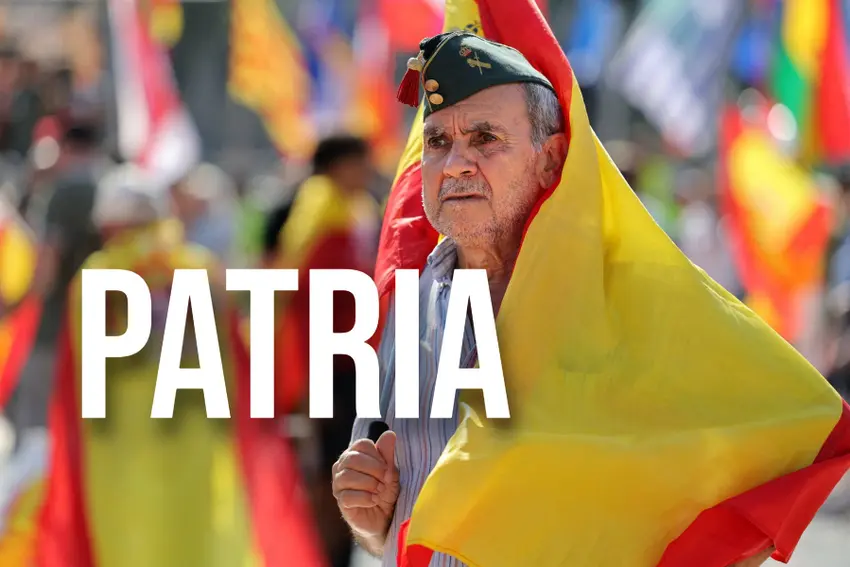
Patria is the Spanish word for homeland, fatherland or mother country.
Spain’s Royal Academy defines it as either the place or country where one is born or the native or adopted land which human beings feel attached to either through legal, historical or emotional links.
You may have heard the word patria recently as it’s the title of an HBO series which deals with the taboo subject of Basque separatist/terrorist group ETA.
READ ALSO: The best new Spanish TV series to binge-watch
Patria has some compound uses in expressions such as morir por la patria (die for your country), patria potestad (child’s custody) or por amor a la patria (for the good of the country) but the most important thing to know about this word is that it’s fairly loaded with symbolism given Spain’s history.
When should I use this word?
Patria is used to denote that emotional connection to a particular place you’re proud to belong to rather than just referring to your country of origin.
So if you’re meeting someone for the first time, they may think you’re a fervent nationalist if you use patria to tell them where you’re from.
It’s more standard to say mi país de nacimiento to refer to one’s country of origin or birth, in the same way as you wouldn’t expect to see the words “motherland” on a form you’re filling in.
But if you’re talking to a friend about the fact that you feel a bit homesick, referring to mi patria won’t necessarily raise any eyebrows.
All this may seem a bit ridiculous but in Spain being patriótico - whether it’s hanging a Spanish flag from your balcony or referring to Cataluña as mi patria - could lead to disapproval as political views regarding nationalism and separatism run deep among Spaniards.
READ ALSO: Why do many people consider the Spanish flag to be a fascist symbol?
This contrasts with a famous quote in the 1997 Spanish-Argentinian film "Martín (Hache)" in which lead character Federico Luppi tells his son that “la patria es un invento” (the concept of the mother country is made up) after he asks him if he ever misses home.
Could you give me some examples?
Tengo DNI español pero Catalunya es mi patria.
I have Spanish ID but Catalunya is my homeland.
ETA estaba dispuesta a matar por la patria.
Eta was willing to kill for the fatherland.
Nací en Irlanda pero después de 40 años aquí España es mi patria.
I was born in Ireland but after 40 years here Spain is my homeland.
Se divorcian pero han acordado compartir la patria potestad.
They're getting divorced but they’ve agreed to share custody of their kids.
Comments