
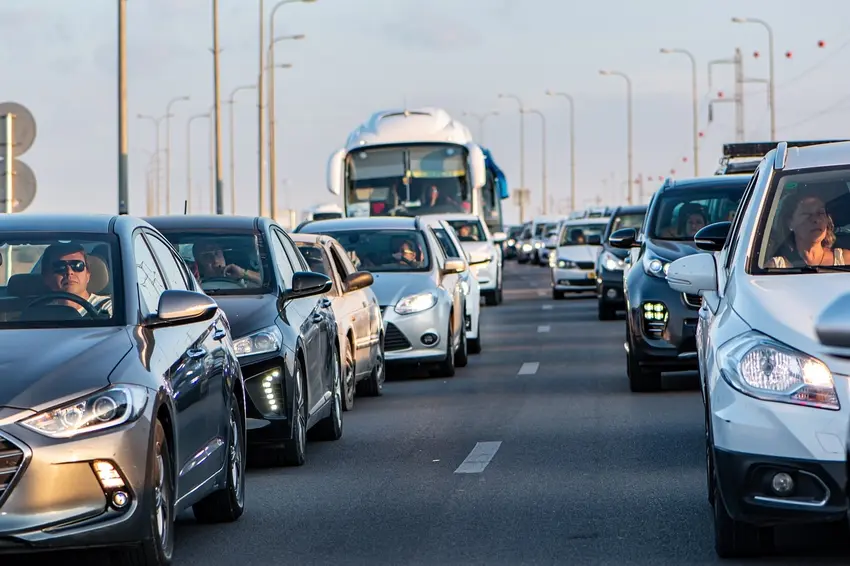
With millions of people expected to be hitting the Spanish highways throughout August 2024, traffic jams at peak times are inevitable.
This is after all Operación Salida, the name Spaniards have given to the 'great exodus' that occurs every year as millions head to the coast for their summer holidays.
It occurs typically during the last few days of July or the first few days of August, again on August 15th (a public holiday) and then finally at the end of August when everyone returns home.
There’s nothing like being stuck in traffic on a hot highway for hours and hours to put a dampener on that holiday feeling, but help is at hand.
Here’s what you need to know to avoid the busiest travel times, find the best routes, and avoid difficulties as you head off for your summer break.
When are the roads at their busiest?
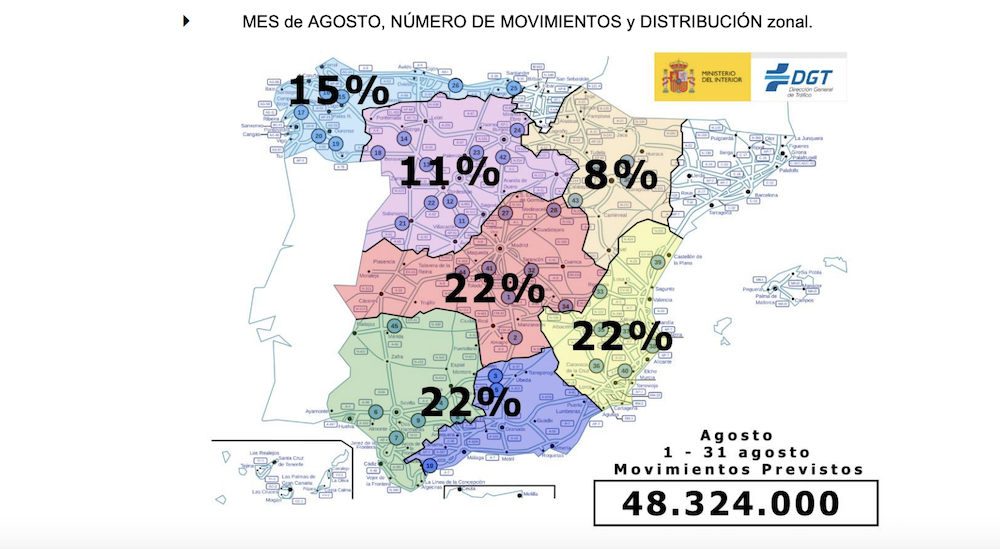
Spain's General Directorate of Traffic (DGT) predicts that there will be around 48.3 million trips on Spanish roads throughout the month of August this year. Approximately 3.1 million of these will take place in these first few days of the month.
Andalusia and Valencia are expected to be the busiest regions during this time.
The busiest times were on Wednesday July 31st and this morning (August 1st) between 9am-2pm, but this weekend from Friday August 2nd until August 4th will also be particularly busy.
On Sunday, there may also be a rise in traffic towards big cities as those who had their holidays in July will be returning home.
The DGT has advised people to avoid these busy times and wait until next week to make the journeys.
READ ALSO: How to survive summer in the city in Spain
The roads are expected to clog up again on Thursday August 15th (a national holiday across Spain) and the following day Friday 16th.
The same is likely to happen when people drive back home at the end of their summer holidays on Friday August 30th to Sunday September 1st, which will see the biggest number of cars on the roads returning to the cities.
Spanish traffic authorities will add additional lanes during peak rush hour times, halt all road construction work and prevent slow vehicles such as lorries from driving during these periods of heavy traffic.
Apps to avoid the worst of the traffic
A choice of apps can be utilised to warn you of traffic hotspots in real time, help find alternative routes, warn of police controls and steer you away from motorway tolls or locate the best-priced fuel on your route.
It’s most likely already on your smartphone. It provides real time info on traffic jams and offers faster alternative routes.
This is one of the best apps for Operacion Salida, providing real time traffic and alternative routes, it also allows users to share information on accidents, police checkpoints and other roadside dangers or annoyances. This app also offers comparative prices at fuel stations along your route.
The official app from Spain’s traffic authority provides info on speed cameras, and up to the minute trouble spots along your route.
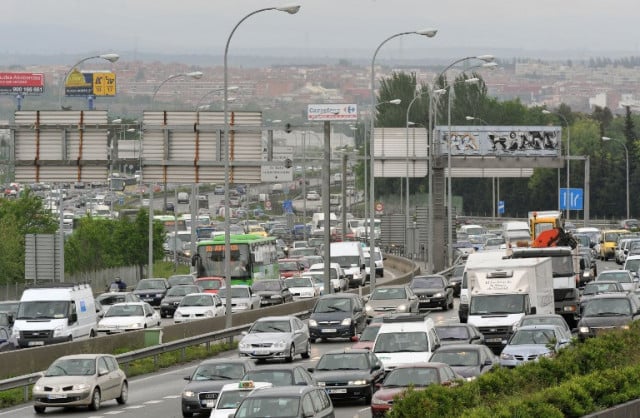
File photo of traffic jam on a motorway in Madrid. Photo: AFP
This app is an information-sharing platform that relies on drivers sharing info on traffic in real time.
This app doesn’t just provide minute-by-minute updates on traffic congestion, it also allows you to plan your journey to beat the traffic, calculating the best time to leave. It also provides info on service stations along the route and parking at your destination.
The Michelin app gives real time traffic updates, will advise you of a route to avoid tolls and can also calculate how much fuel you need and the cheapest place to buy it on the way.
This app is the Tripadvisor equivalent for rest stops advising on good places to eat at roadside service stations and where to find the best facilities.
Eyes in the skies
Traffic helicopters and drones will likely be patrolling the skies over Spain’s busiest roads and at known traffic hot spots to look out for dangerous driving, traffic accidents and tailbacks.
The drones are equipped with cameras to beam live footage back to road traffic monitors who will use the information to alert ground patrols to traffic problems such as accidents.
Drones will also be deployed to the Canary Islands and the Balearic Islands to monitor holiday traffic.
There will also be undercover police vans on the roads to keep a close eye on drivers.
Roadside patrols and speed traps
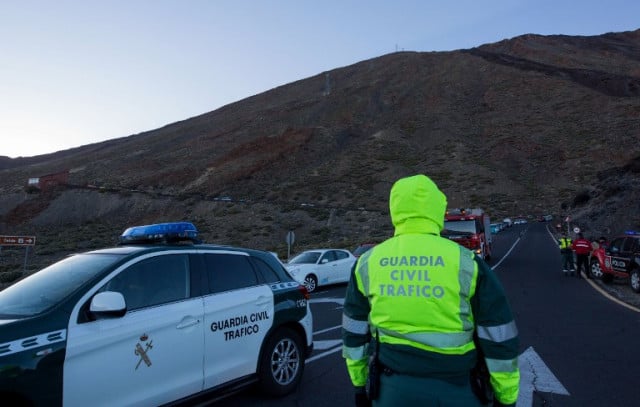 Photo: AFP
The Civil Guard have said there will be more patrol cars out on the roads during the busiest periods of Operacion Salida and at peak times leaving beach resorts.
Expect to see roadside checks where you could be asked to present your papers (car registration/insurance/driving license) and to see random breathalyser tests to check for drunk driving.
Speed traps are installed across Spanish roadsides to check for speeding vehicles. Keep to the speed limit or you may find you come back from holiday to a rather stiff speeding fine.
MAP: The trick to find out where Spain’s invisible speed cameras are
Check your car before your journey
Spain’s car owners club, RACE, warns that the majority of car problems resulting in roadside assistance come from battery and tire problems.
Make sure that you check your tyre tread (it should be a minimum of 1.6mm across the central ¾ line of the tire) ahead of the journey and that you have a functional spare tire in the vehicle.
Also check tyre pressure at the start of your journey, and the fluid levels of oil, windscreen cleaning liquid and radiator coolant.
READ MORE: What you need to know if you are in a road traffic accident in Spain
Drive safely and wear a seat belt!
Last summer 227 people lost their lives on Spanish roads during the months of July and August with the DGT recording that several of these were not wearing a seatbelt.
Take regular breaks
The DGT advises drivers to stop at least every 200km to stretch their legs, have a drink and use the toilets and get some fresh air to prevent tiredness.
During a previous Operación Salida, the DGT also produced this handy guide to outline the responsibilities of everyone in the car.
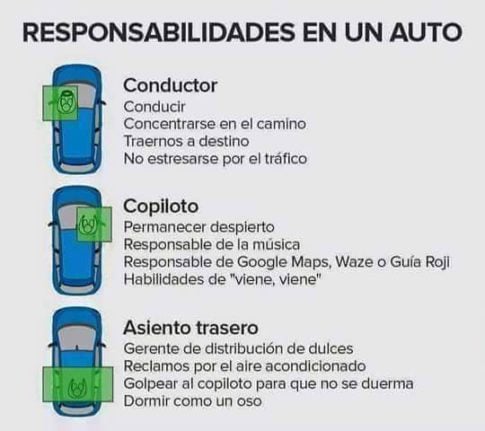
Driver: Drive, concentrate on the road, focus on the destination, don't stress about the traffic.
Front seat passenger: Stay awake, responsible for the music, responsible for Google maps, Waze etc, warn driver of any dangers.
Back seat passenger: Chief distributor of sweets, can issue complaints about air conditioning, can hit the front seat passenger to make sure they don't fall asleep and sleep like a bear.