
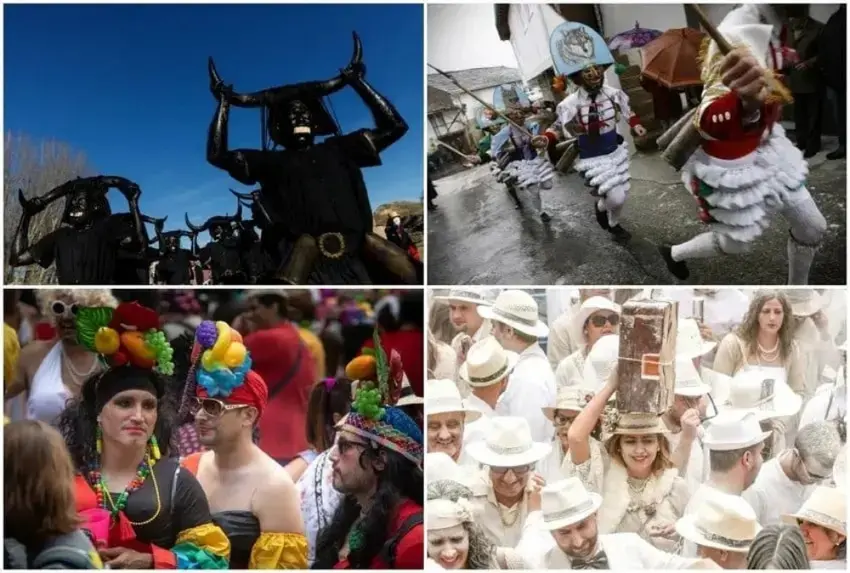
In the week leading up to Lent, Spain plays host to some of the world's biggest and best carnivals.
There are also numerous smaller carnivals, many of them with roots going back hundreds of years, which really capture the imagination.
Spaniards in locations across the country take great pleasure and pride in dressing up, play fighting and letting off steam before the belt-tightening of Lent.
This year, carnival or carnaval is on from February 12th until the 18th in most locations in Spain where it is celebrated. As you're about to see now, the party can be just as weird as it is wonderful.
Mud madness and grotesque grins in Laza, Galicia
If you’re spending carnival in Galicia, chances are you’ll get more than just a spot of rain. So why not take it a step further and get involved in a full-on mud battle? In the town of Laza locals engaged in a friendly war where rags drenched in mud are thrown at random at everyone taking part. Laza Carnival also offers an alternative to those who don’t want to wash mud out of their hair for a week. Os Peliqueiros, seen in the image wearing odd traditional clothing and creepy masks, are ancestral figures thought to represent Galician taxmen in the 16th century. Up to 150 run through the streets of this small town in northern Spain, whipping anyone who gets in their way.
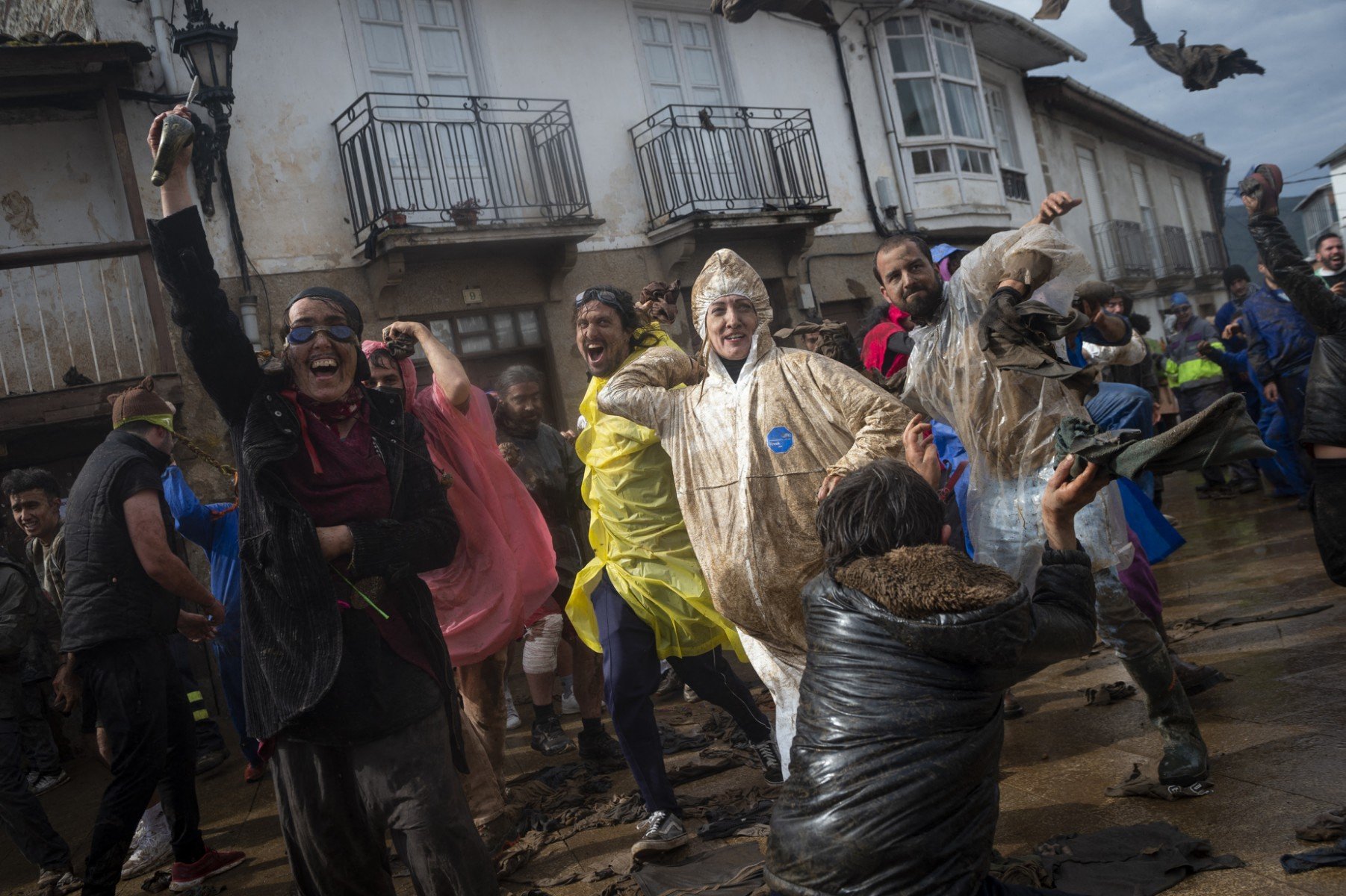 Revellers throw rags of mud as they take part in the "Farrapada" during the traditional carnival of Laza. (Photo by MIGUEL RIOPA / AFP)
Glitz, glamour and party vibes in Santa Cruz de Tenerife
Billed as the best place to celebrate carnival outside of Rio de Janeiro, the Santa Cruz carnival in Tenerife draws crowds of 400,000 and involves street parties, parades, satirical street bands and of course, the crowning of a carnival queen. It's without a doubt the biggest carnival in Spain.
Drag queen election in Las Palmas de Gran Canaria
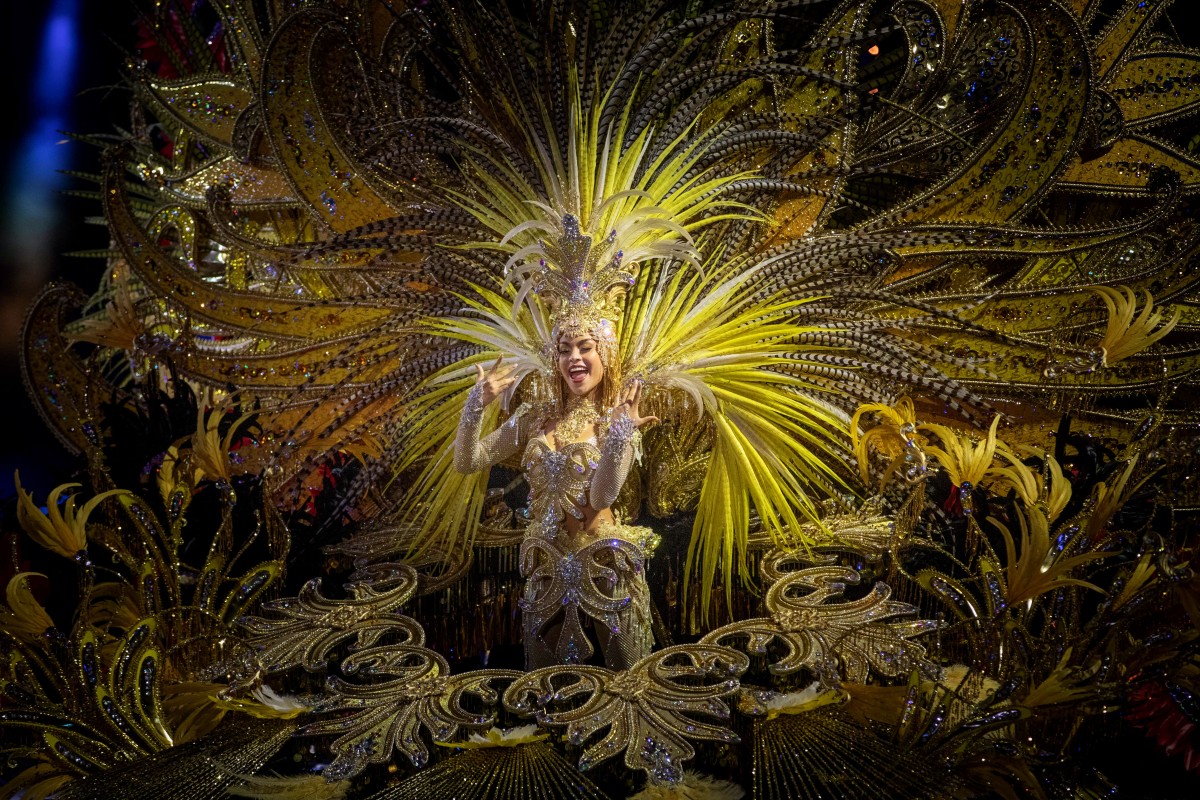
You can't get much glitzier than the annual carnival celebration in Las Palmas, the capital of Gran Canaria. The surreal nature and extravagant costumes seen at each year’s pageant are a feast for the senses, making the event just as popular as the standard Carnival Queen election in neighbouring Tenerife. Anyone can take part in the drag gala, but only a handful of women have taken to the stage since the celebration began in 1998.
 Drag queens bring all the fun to the Las Palmas carnival. (Photo by DESIREE MARTIN / AFP)
Where the wild things are in Piasca, Cantabria
If you fancy reliving some childhood nightmares head to the village of Piasca in Cantabria, northern Spain. There you will find half of the locals covered in animal skins and wearing unnerving animalistic masks, who will no doubt chase you away with their brooms. Another tradition of the so-called Zamarrones Carnival involves going from door to door begging for sausages, eggs and bacon while heading to the neighbouring village of Los Cos.
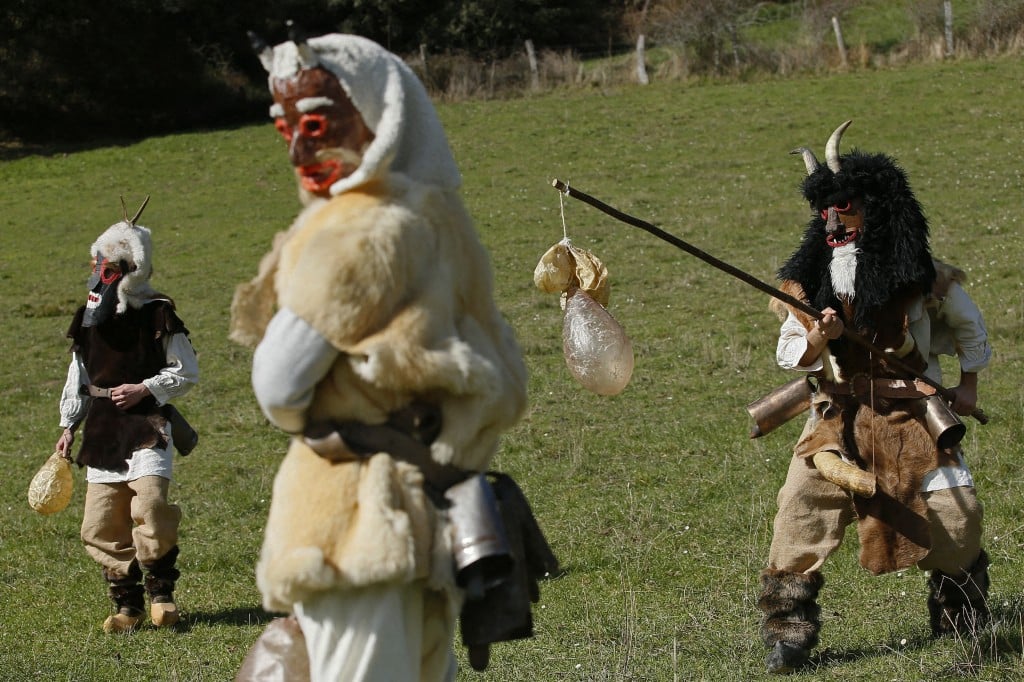 These scary-looking costumes in Piasca are an important part of carnival here. (Photo by CESAR MANSO / AFP)
Mad masks in Carrizo de la Ribera, Castilla y León
This festival in the town of Carrizo de la Ribera in Castilla y León involves locals dressing up as characters called 'antruejos', terrifying-looking figures that you definitely wouldn't want to meet on a dark night.
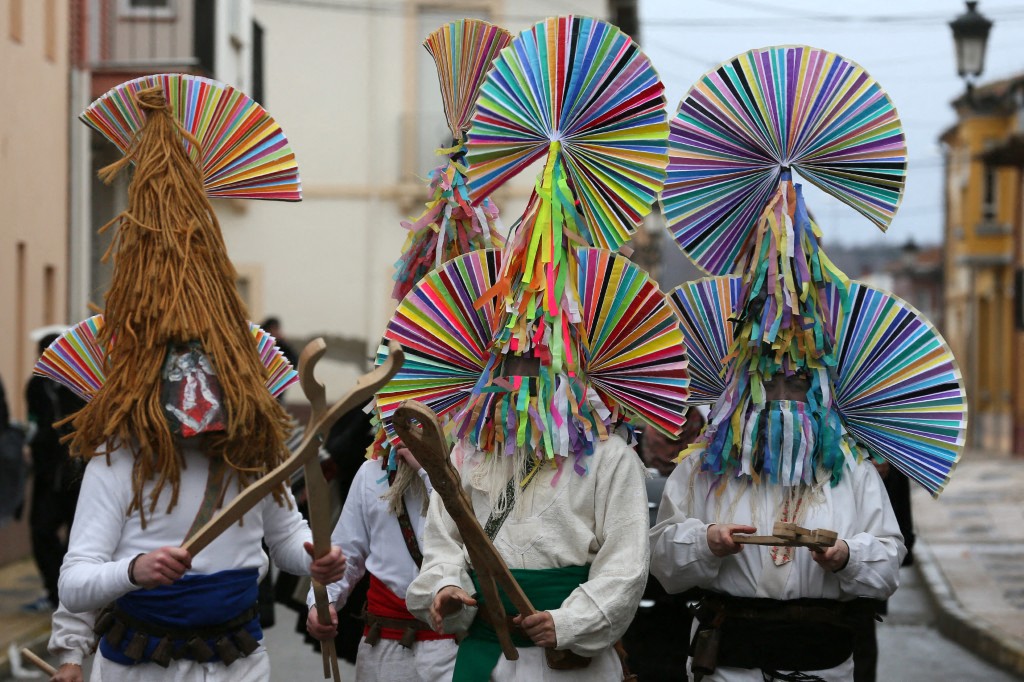 A group of masked men dressed as "Antruejos" carrying cowbells tied to his back take part in the carnival of Carrizo de la Ribera. (Photo by CESAR MANSO / AFP)
Powder party in La Palma, Canary Islands
Los Indianos festival sees thousands of people dressed in white take to the streets of La Palma (Canaries) and chuck talcum powder at each other for hours on end. The fiesta’s name refers to the Canarian migrants who sought a better life in Latin America in the 19th century and were greeted warmly on their return to the island of La Palma. As for the talcum tossing, it's thought to be linked to the disinfectant powder sprinkled on the travellers to avoid the spread of disease.
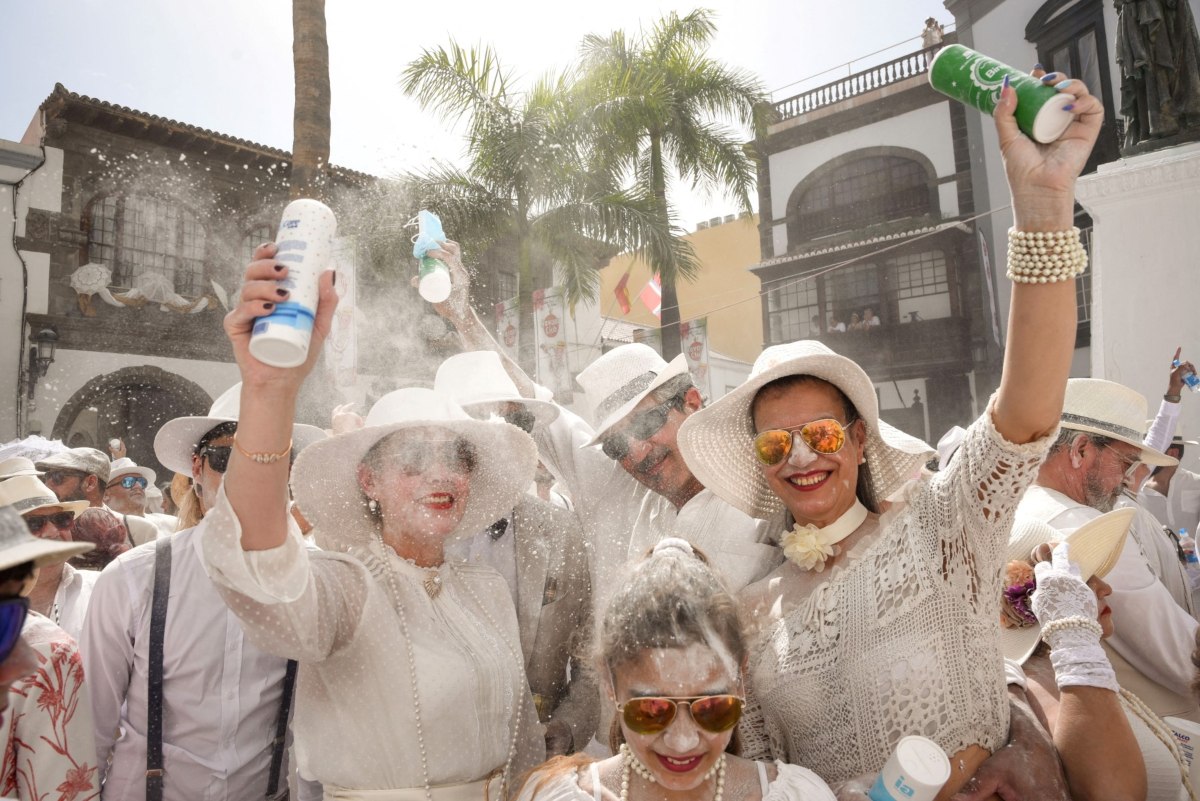 Talcum powder fights are a fun way to celebrate carnival in La Palma. Photo: Desiree Martin/AFP
A load of bull in Ciudad Rodrigo, Castilla y León
It may come as no surprise that one Spanish town has linked two of the country’s greatest traditions together: bull running and Carnival. After all, if being chased by a 700-kilo beast seemed foolish enough already, doing it in fancy dress seems to make sense somehow. Head to Ciudad Rodrigo near Salamanca (west Spain) for El Carnaval del Toro.
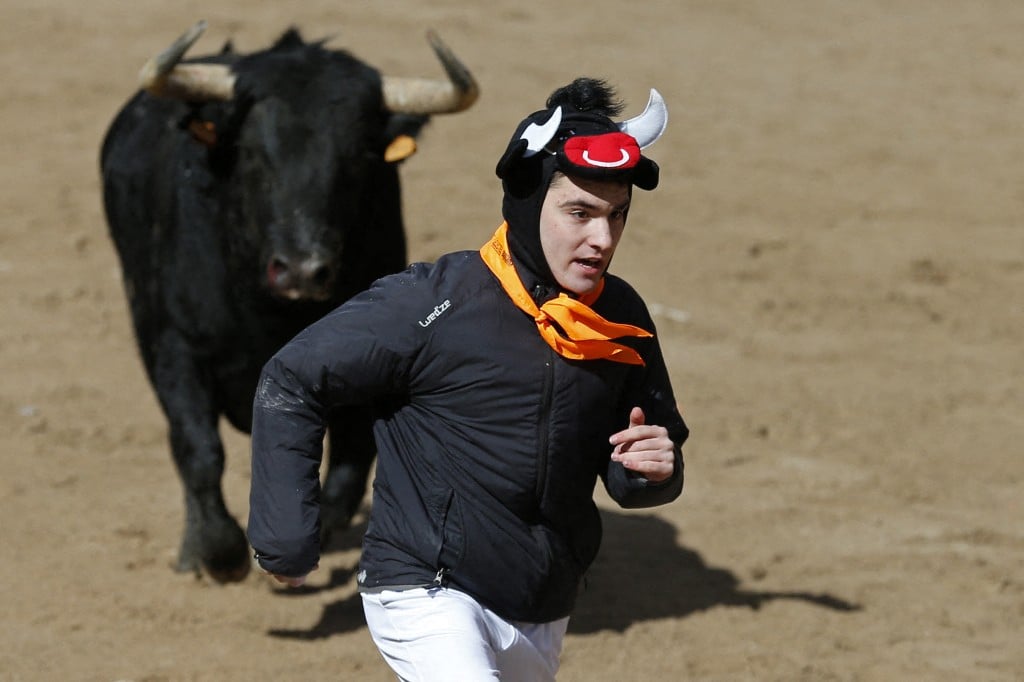 Combine carnival fun and running with the bulls in Ciudad de Rodrigo. (Photo by CESAR MANSO / AFP)
Basque bigfoots in Ituren and Zubieta, Navarre
Old habits die hard, especially ancient ones in the Basque Country and Navarre. Carnival traditions in the villages of Ituren and Zubieta (Navarre) see locals dress up as wild beasts from head to toe as they march through the streets escorted by Joalduns, "those who carry the bells" to scare away the evil spirits. Similar medieval traditions revolving around farming and animal herding are also found in Slovenia and Bulgaria.
READ MORE: Is this the scariest carnival in Spain?
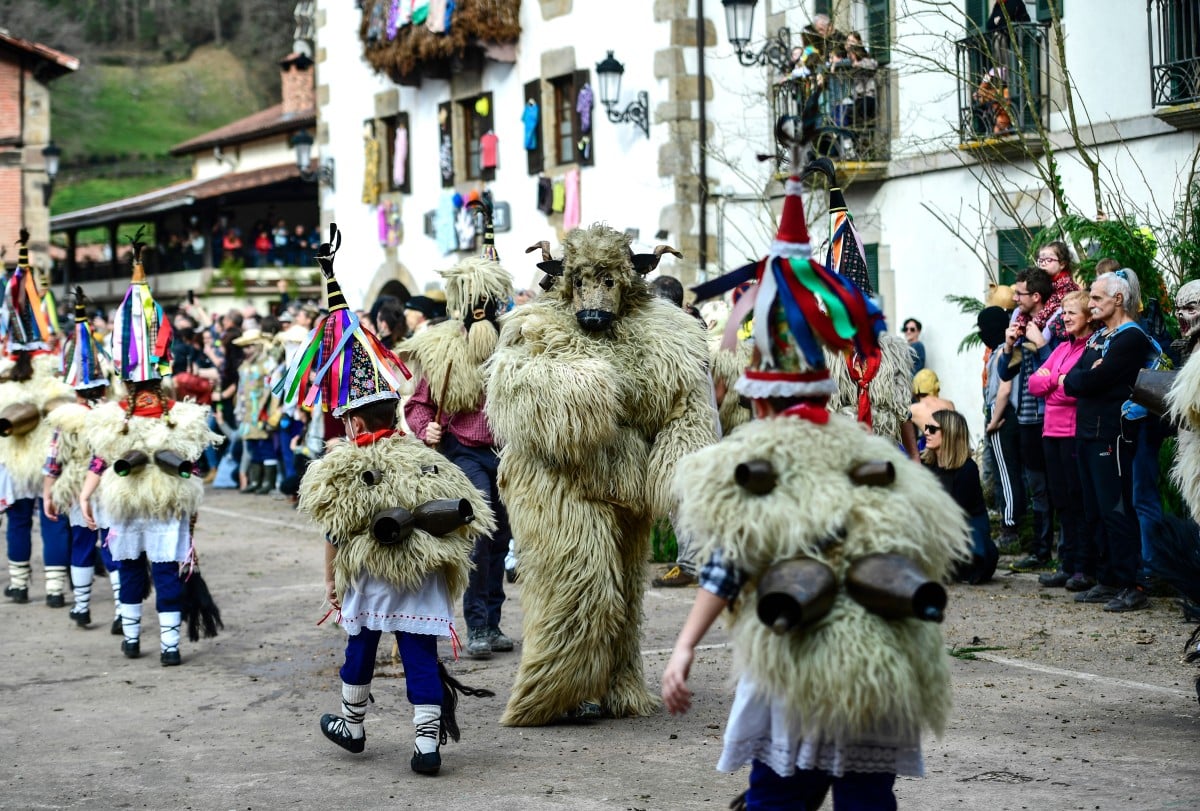 Locals from the neighbouring villages of Ituren and Zubieta have one of the most eye-catching carnivals in Spain. (Photo by ANDER GILLENEA / AFP)
Meet the giants in Solsona, Catalonia
In Solsona, Catalonia, carnival festivities have a long history. Under Franco, the celebrations were forbidden, however, the city was the first to begin celebrating again after his death. This carnival gives you the opportunity to experience some Catalan cultural traditions, chief among them the parade of the gegants (giants) or the symbolic hanging of the (Catalan) donkey.
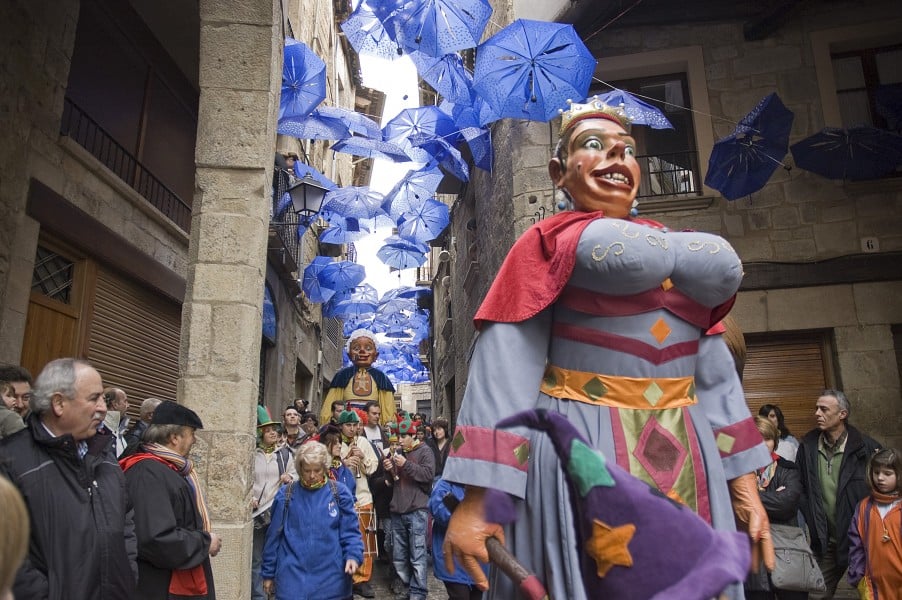 Keep an eye out for the giants roaming the streets of Solsona. Photo: Solsona Turismo
Arrival of the birds in Villarrobledo, Castilla-La Mancha
The carnival in Villarrobledo is another one with a long history which goes back to the 19th century. Traditionally, the festivities begin on the Thursday with the Llegada de los Juanes, a parade of people wearing bird masks. They are the opening act for ten days full of costumes, fun and fiestas. There is also a children's carnival with its own costume competition.
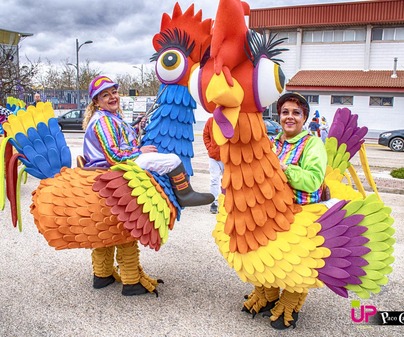 Carnival in Villarrobledo begins with the arrival of the birds. Photo: Castilla-La Mancha Tourism
Gay carnival in Sitges, Catalonia
More than 250,000 people flock to the coastal town of Sitges about 35 kilometres from Barcelona for one of the biggest gay carnivals in the world. The week is packed with parades, parties and shows and the gay-friendly town opens its doors to thousands of revellers. By the way, this one is also said to be one of the safest street festivals in the world. The best party night is on Saturday.
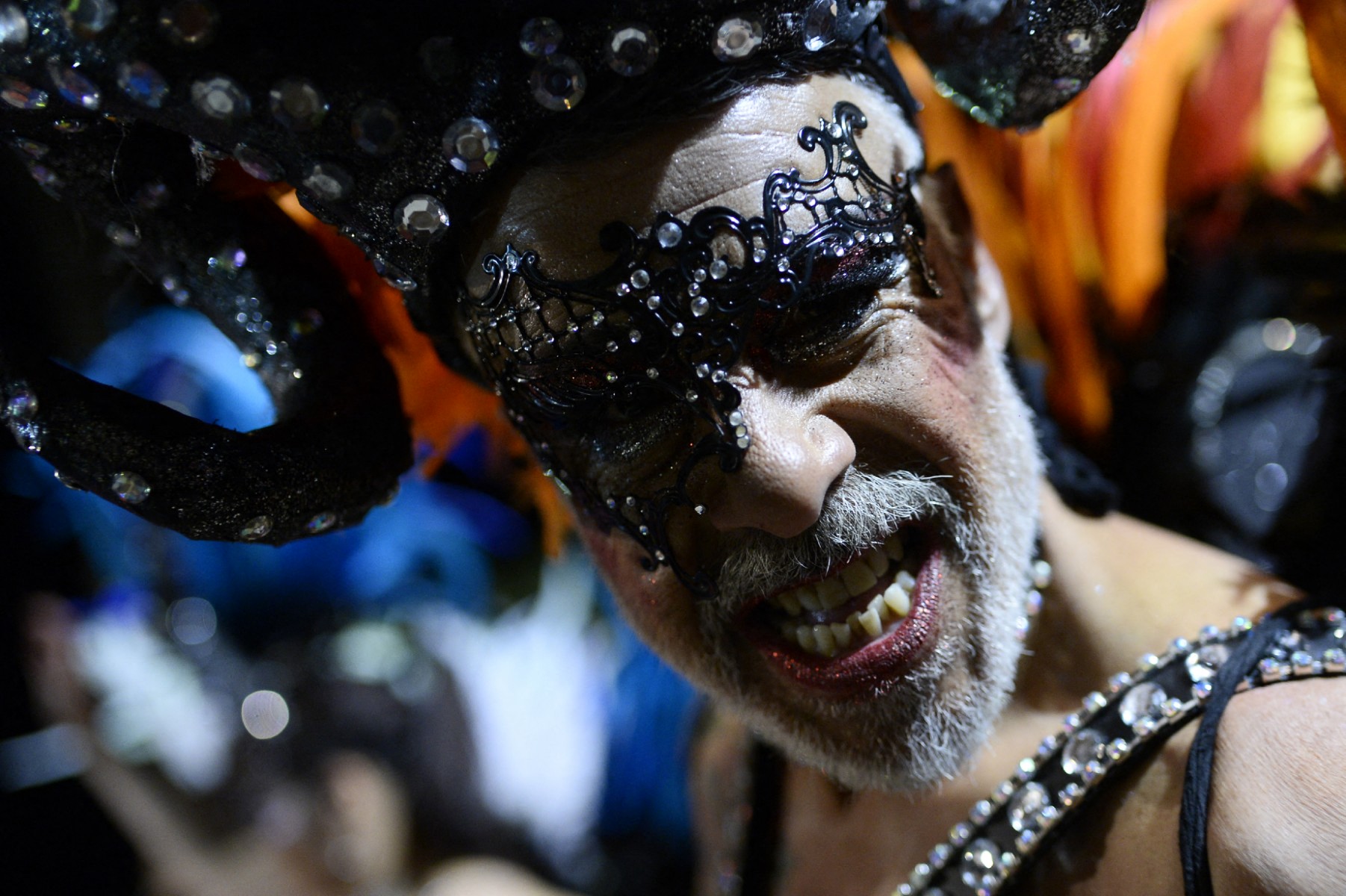 A reveller parades during Sitges Gay Carnival. (Photo by Josep LAGO / AFP)
Drink and sing in Cádiz, Andalusia
The carnival in Cádiz is one of the most famous in Spain, dating back to the 16th century. These days it's all about dressing up and poking fun at politicians and people in the news, as well as the usual eating and drinking of course.
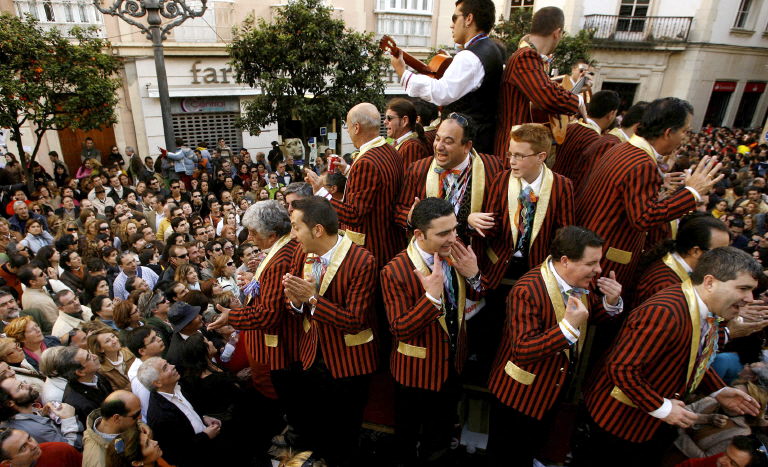 A carnival choir entertains the crowds in Cádiz. (Photo by JOSE LUIS ROCA / AFP)
Feeling devilish in Luzón, Castilla–La Mancha
During the festival of the devils in Luzón, near Guadalajara, local men paint their faces with oil and soot, don horns and cowbells to transform into devils. Records show the carnival dates back to the 14th century.
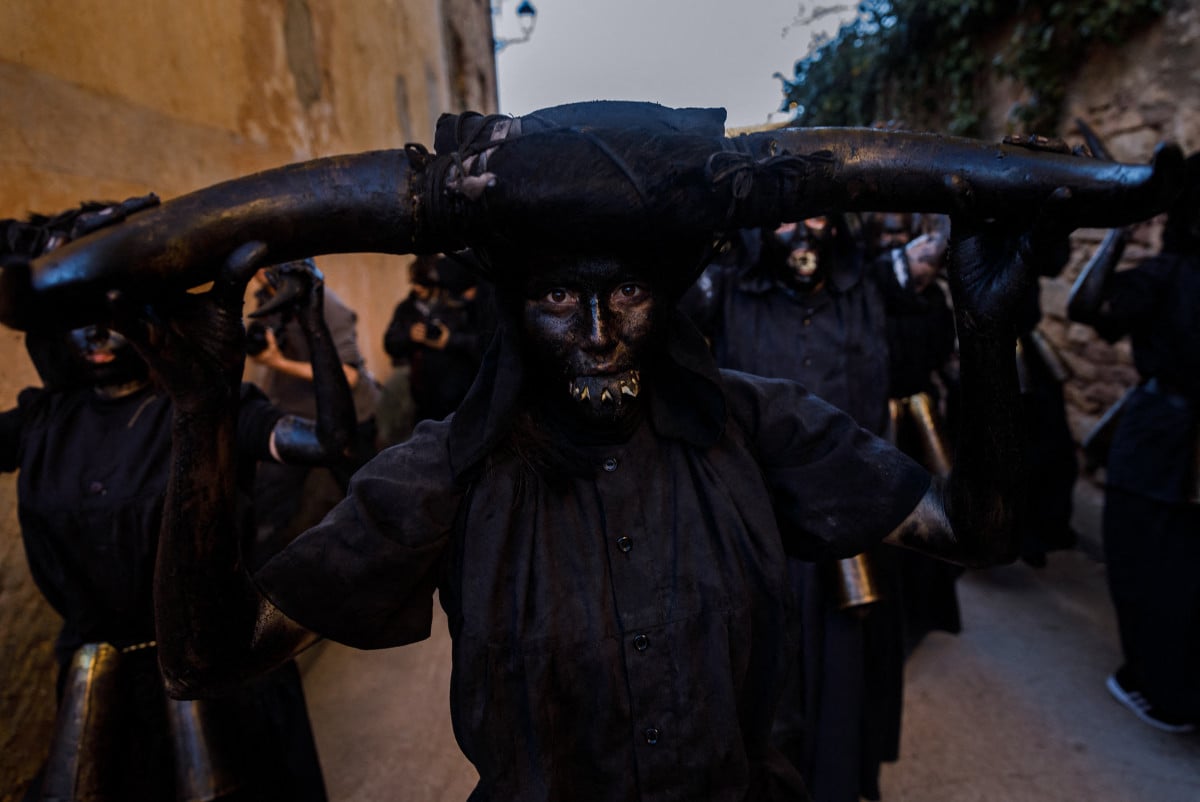 People sporting horns on their heads and grease on their faces to represent "Diablos de Luzon" (Luzon's devils) . (Photo by CESAR MANSO / AFP)
Flour fights and grinning masks in Verín, Galicia
As well as grinning masks, like the nearby Laza carnival, the one in Verín also includes a battle with flour, water and live ants used as ammunition and ends with a reading of the satirical 'Donkey’s Will' and the burning of an effigy. The festive event is considered to be the most ancient and most splendid in Galicia and is not governed by civil laws or religious precepts.
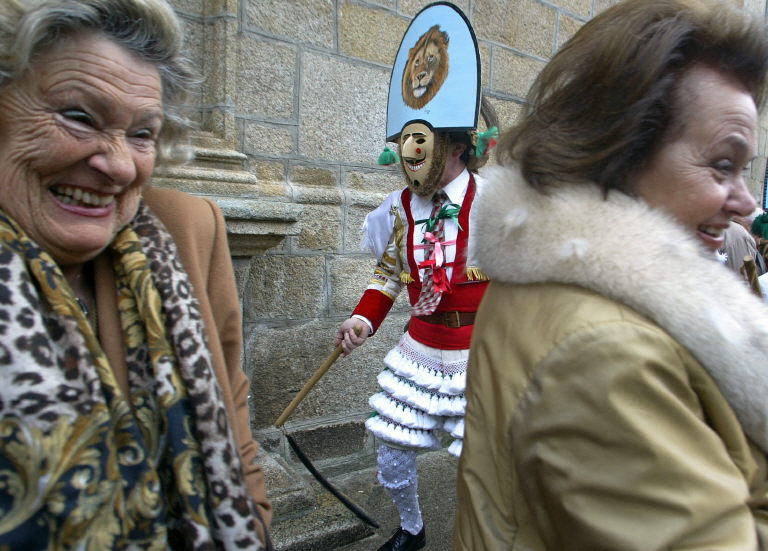 You're never too old to enjoy carnival in Verín. (Photo by MIGUEL RIOPA / AFP)
El Gallo de Carnaval in Mecerreyes, Castilla y León
This carnival's name literally translates to "The Carnival's Rooster" and takes place in Mecerreyes, Burgos. It is celebrated with lots of singing, dancing, but the main part consists of characters called Zarramacos who protect the Gallo or rooster from being attacked. One person dresses as the rooster, while participants also throw feathers and resin.
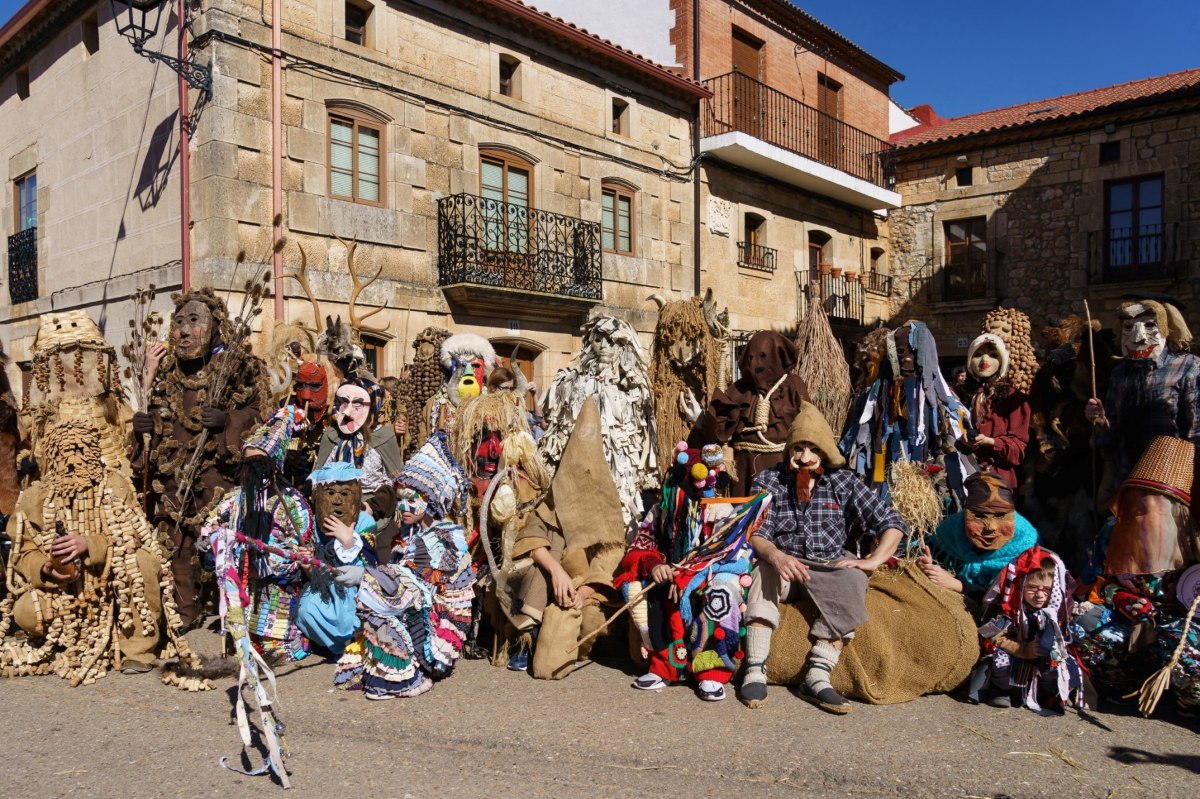 Revellers dressed as Zarramacos, wearing handmade costumes made with ropes, bones, or leaves during the celebration of "El Gallo de Carnaval" in Mecerreyes. Photo: CESAR MANSO / AFP
Burial of the sardine, all over Spain
Celebrations turn a bit too surreal in many parts of Spain when on Ash Wednesday (this year February 18th) the streets are jam-packed with fake weeping widows, men and women, who follow a giant polystyrene sardine to its burial. The message behind the funeral parody is more symbolic than it may initially seem: the sardine represents life’s excesses and its burning at the stake, the purge of such vices and the rebirth of our souls.
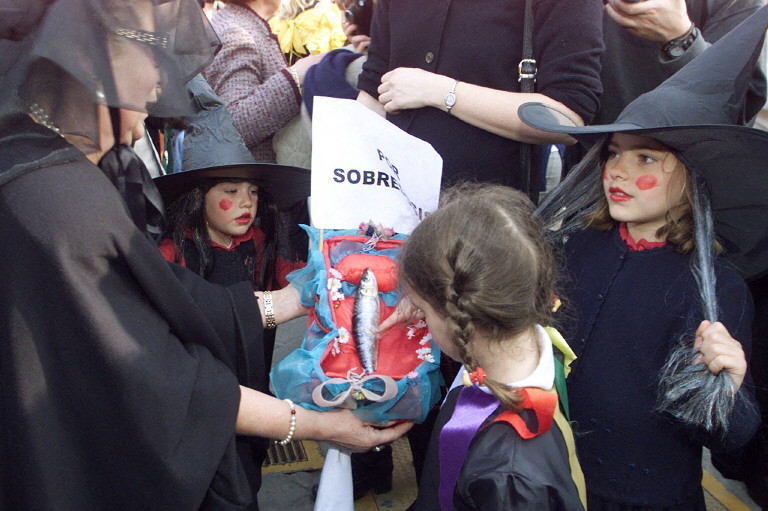 The burial of the sardine often marks the end of carnival in Spain. Photo: Christophe Simon/AFP
Comments